

Dfkm. Dr. Hans Gerhard (John) Stern
- Born on: 13.8.1912
- Birthplace: Mährisch Ostrau (Moravská Ostrava),
- Category: Doctorate program
- Right of domicile: Orlau (Orlová),
The English version is based on a translation by Artificial Intelligence. The authentic version is the German version.
Preliminary remark: Please click here for an English version.
Vorbemerkung: Für eine Fassung auf Englisch klicken Sie bitte hier.
Hans Gerhard was the son of the large landowner Artur Stern (born May 8, 1880, in Mährisch Ostrau/Moravská Ostrava) and the businesswoman Stephanie. His mother was born on December 24, 1888, in Ptení as the daughter of Therese Mittler (maiden name Kohner) and the engineer Karl Jacob Mittler, who was the chief construction commissioner (Bauoberkommissär) of the k.k. State Railways.
School and University
When he was seven years old, Hans Gerhard spent a year in a children's home in Meran, in order not to be affected by the divorce of his parents. Certificates from the family archive show that he attended three different schools in two other countries: in addition to the Meran home, a private school in Ostrau (1919/20), a school run by the school reformer Eugenie Schwarzwald at Regierungsgasse 1 (today: Leopold-Figl-Gasse) in the 1st district of Vienna (1922/23), and the federal high school (Bundesgymnasium) in the 19th district (1923 to 1931).
Subsequently, he enrolled at the University for World Trade (Hochschule für Welthandel) between the winter semester of 1931/32 and the summer semester of 1937. At this time, his father had lost his money. As Hans Gerhard reported to his daughter-in-law Karen Brown in 1992, his studies were "supported very reluctantly" by his uncle Dr. Leo Karl Stern. At the 'Welthandel', Hans Gerhard successfully completed his diploma studies; for this, he received the diploma certificate in July 1936. He subsequently enrolled for a doctorate while simultaneously holding an unpaid full-time position at a shipping agent's office.
Stern's doctorate occurred during the period of the 'Anschluss' of Austria: He submitted his dissertation Die Grundlagen des Wettbewerbes und der Geschäftspolitik in der internationalen Spedition in the summer of 1937. He took the first Rigorosum on January 21, 1938, and the second Rigorosum on June 20, 1938.
Hans Gerhard Stern was among the few Jewish doctoral students who were allowed by the Nazi regime to complete their doctorate after the invasion of the Wehrmacht into Austria; this had to happen during the summer semester of 1938. Thus, Stern was one of the seven Jewish doctoral students who were promoted at the 'Welthandel' on July 12, 1938. According to a regulation from the Austrian Ministry of the Interior and Cultural Affairs, which was then under the supervision of Reichsgovernor Arthur Seyss-Inquart, the promotion of Jewish doctoral students was subject to a number of restrictions designed to strip this academic event of its dignity and give it the character of an administrative act:
- the promotion had to take place without the public;
- the candidates were not allowed to invite relatives or friends to the promotion;
- the academic officials like the rector and promoter were required not to appear in robes;
- instead of the usual oral sponsorship, the Jewish doctoral students had to take their oath in writing by signing a printed form;
- Speeches were not permitted.
Stern received a certificate from the university with a swastika, which he kept for life.
He published part of his dissertation in 1938 in self-publishing. Already on July 5, he had submitted 50 copies of his doctoral thesis to the University for World Trade. He either did not apply for an exemption from the publication obligation or it was not granted.
Emigration
At the beginning of August 1938, Stern was ordered by the Asset Transfer Office, which organized the systematic expropriation of the Jewish population in the 'Ostmark', to "offer" his securities to the Reichsbank in Vienna.
At the end of October 1938, Stern gave up the apartment at Vormosergasse 5/2 (19th district) where he had been registered since July 1935. At the new address (Schwarzspanierstraße 4, 9th district), he was listed as "unknown" in the registration information, as was indeed correct.
In fact, he had been able to leave Austria on March 30 or 31, 1939, from Prague towards New Zealand via the Netherlands and Great Britain. Unfortunately, his train was delayed for two days and nights at the border crossing between Germany and the Netherlands near Oldenzaal on March 31. Eventually, the Dutch authorities decided to let the train in, contrary to a restrictive border policy against Jewish refugees. At first, women and children were allowed to enter, then married men, and finally unmarried men like Hans Gerhard Stern.
Before he could leave Austria and Czechoslovakia, he had been certified at the end of July 1938 by the Vienna police headquarters – in connection with a failed plan to emigrate to the USA – that there were no "negative reports" against him; he had evidently paid all the necessary coerced contributions to the Nazi state. As Stern reported to Karen Brown, March 31, 1939, was the last possible date for citizens of Czechoslovak nationality to enter Great Britain without a visa – as Nazi Germany had invaded Czechoslovakia in mid-March and established the Protectorate of Bohemia and Moravia ("Reichsprotektorat") there.
Thus, Hans Gerhard Stern managed to escape to London in early April 1939. Although he was proficient in English, he did not want to stay in Great Britain. He had been allowed to enter this country on the condition that he would not stay longer than three months and would not accept paid or unpaid work during this time. He also possessed an affidavit that would have allowed him to acquire American citizenship. Instead, however, he chose New Zealand, a part of the British Commonwealth of Nations. An appropriate entry permit was dated August 25, 1938. Notably, he received it not based on his university degree but because of his experience in the timber industry – having earlier managed his father's forests and sawmills in Ostrau and the surrounding area. The New Zealand entry permit noted that Hans Gerhard Stern was in good physical and mental condition, spoke English, German, and French, and brought no less than 200 pounds with him. In fact, he should have paid 300 pounds as a "landing fee", but managed to reduce the sum to 200 pounds.
New Zealand
On June 29, 1939, Stern arrived in the exiled country of his choice, which he gratefully called his new homeland and where he would live until the end of his life. In New Zealand, he changed his first name to John in 1941; alongside the Anglicization of "Hans", he dropped the second first name "Gerhard".
Like most of the Jewish refugees from the German Reich, he settled in the capital, Wellington. However, acceptance by New Zealand proved to be difficult. After Great Britain and New Zealand declared war on Nazi Germany on September 3, 1939, John was subjected to a stricter alien law (Beaglehole n.d., [p. 2]). As a member of Class D, which represented the second lowest class under the Alien Emergency Regulations of October 24, 1940, he was repeatedly checked by the police. Moreover, due to his strongly pronounced German accent, he was viewed with suspicion by many locals. The New Zealand authorities also did not recognize the academic degrees he had obtained at the Vienna University for World Trade. Therefore, he attended evening courses at the then 'University of New Zealand'. These allowed him to acquire the title of 'Bachelor of Commerce' in October 1939. In January 1942, after a two-year part-time study, he became an accountant. John earned his living through employment with an auditing company, an energy company, an egg factory, and an export company. However, he was only able to earn an adequate salary after being admitted to the New Zealand Institute of Chartered Accountants on February 12, 1948. This allowed him to become self-employed as a bookkeeper. In addition, he obtained a license for steel importation in 1955, which proved to be lucrative. Finally, John had to wait for the end of World War II before he could apply for New Zealand citizenship, which he obtained in 1947.
Until the end of his life, John participated in the political life of New Zealand. Membership in the New Zealand Labour Party cannot be substantiated, although he wrote several comments on economic issues in its newspaper The Southern Cross. Later, he joined the New Zealand National Party and often advised Prime Minister John (Jack) Marshall, who was Prime Minister in 1972 and whom he knew personally because both belonged to the National Party.
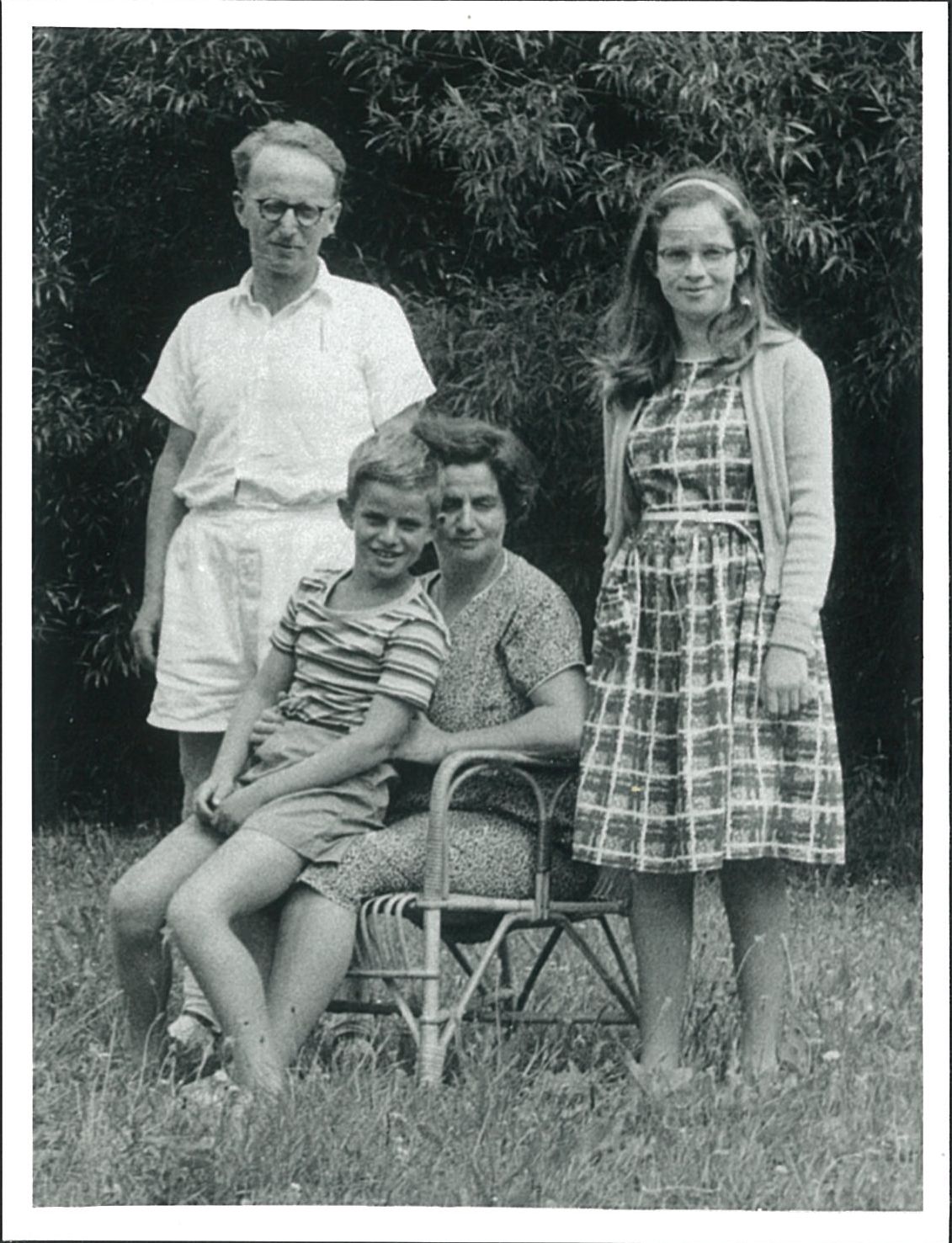
In Wellington, John met Maureen Lindsay (born December 22, 1920, in London, died September 6, 1975, in Wellington). This teacher, who came from an Irish-English family, later became his wife. From the marriage, which took place on December 21, 1944, a daughter (Lindsay) was born in 1949 and a son (Tim) in 1953.
Tim Stern reported in 2016 that his father was severely traumatized by the painful experiences he had to endure in Europe, especially in Vienna during the Nazi regime. It is telling that he never wanted to teach his children the German language or other aspects of European culture. Only his enthusiasm for skiing and playing tennis made it into exile. The stigma and discrimination he had to suffer due to his Jewish descent led him to warn his son in the mid-1990s not to enroll one of his grandchildren in a Jewish kindergarten in Wellington if it would be stigmatized as he had been in Austria. According to Tim's assessment, a certain distrust towards others prevented his father from taking on greater responsibility. The staff of his auditing company remained relatively small.
On November 10, 1999, Hans Gerhard alias John Stern passed away at the age of 87 as a proud grandfather of four grandchildren (Stephanie, Lucinda, Hannah, and Molly) in a retirement home in Karori, a suburb of Wellington.
The Fate of Family Members in the Holocaust
As mentioned above, Hans Gerhard alias John Stern managed to escape the Holocaust. The same applies to his mother Stephanie, who had lived with Hans Gerhard in Vormosergasse: she was able to escape to Great Britain and arrived in London as early as September 1938. Stephanie survived World War II and died in 1968 at the age of 79.
Many other family members unfortunately remained in Vienna, Czechoslovakia, or Poland and fell into the clutches of the Nazis after the establishment of the mentioned Protectorate of Bohemia and Moravia.
Among the relatives who fell victim to the Holocaust was Hans Gerhard's father Artur, who was deported on July 10, 1942, with his second wife Anna (born August 10, 1884) from Sillein / Žilina to Auschwitz concentration camp.
Hans Gerhard's grandmother Therese Mittler (born September 17, 1865, in Vienna), who had lived at Ferdinandstraße 31/17 (2nd district), was deported to the Ghetto Theresienstadt on July 28, 1942, and on September 21 to the extermination camp Treblinka, where she was murdered.
The fate of Hans Georg's uncle Leo Karl (born March 4, 1882 in Orlau/Orlová) is unknown. It is certain that he had to give up his property to the Nazis; he most likely did not survive the end of World War II. Family members assume that he fled to Poland on skis during the invasion of German troops into Czechoslovakia. It is also believed that he was last seen when he hailed a cab in Krakow/Kraków. It is documented that Leo's wife Johanna (born January 14, 1894, in Mährisch Ostrau, maiden name Pick, called Jana) was deported from Prague to Theresienstadt on September 8, 1942, and from there on September 6, 1943, to Auschwitz, where she was murdered. As a list of the Commander of the Security Police and SD in Prague, Dr. Erwin Weinmann, shows, these relatives of Hans Gerhard, whose home jurisdiction was in the "Reichsprotektorat", were stripped of their property by the Nazi regime.
From his maternal side, Hans Georg's uncle Josef Mittler (born May 8, 1890 in Vienna) and his son Siegfried (born September 4, 1925 in Vienna) were victims of the Holocaust: they were deported from their apartment in Vienna Förstergasse 7/28 (2nd district) to Auschwitz at an unknown time via Budapest.
"Aryanization" and Restitution of Schloss Mitterarnsdorf
Hans Gerhard and close relatives were also dispossessed of their property by the Nazis. The focus was on Schloss Mitterarnsdorf. Immediately after World War I, Hans Gerhard's father Artur bought the castle in the picturesque Wachau along with his already mentioned brother Leo Karl and their brother-in-law Sigmund Franz Welwart (born November 12, 1884, died May 25, 1945). In May 1926, the underage Hans Gerhard was registered as a co-owner at one-sixth in the Lower Austrian Land Register. Following the 'Anschluss' of Austria, the four owners of the castle, who were considered "Jewish" according to the Nuremberg Race Laws of 1935, were deleted from the land register. The new owner of Mitterarnsdorf was the Reichsforstverwaltung, an authority of the German Reich (Wladika 2010, Chap. 3.1).
Several years after the end of World War II, those among the rightful owners who survived the Holocaust attempted to recover the castle. John and his uncle Sigmund Franz Welwart applied for the initiation of a restitution procedure, which the competent commission at the Regional Court for Civil Law Matters in Vienna granted in February 1949. However, since the castle had been owned by a government agency during the Nazi era, there was a long-standing risk that Mitterarnsdorf would have to be considered as so-called German property for potential Austrian reparations by the Soviet occupying power (cf. Wladika 2010, pp. 171-182). Only after Austria regained independence in 1955 and the occupying powers left the country was the castle restituted to the surviving former owners: On October 29, 1958, John, his cousin Maria Spenceley (nickname Mimi), Sigmund Franz Welwart's widow Eleonore (1887 to 1979), and Henriette Vogelsang (1914 to 1997, nickname Harry), the daughter of Sigmund Franz and Eleonore Welwart, were registered as owners in the land register. However, between 1961 and 1963, John and Maria Spenceley sold their shares to the entrepreneur Martina Hörbiger (September 2, 1902, in Mauer near Vienna, died August 21, 1989, in Vienna), sister-in-law of the actor Paul Hörbiger (born April 29, 1894, in Budapest, died March 5, 1981, in Vienna). She subsequently sold the shares in 1966 to Eleonore Welwart and Henriette Vogelsang. Later, Eleonore (called Lore) and Henriette (Harry) sold all the land associated with their share in Mitterarnsdorf, except for the castle itself and a small cherry orchard. These shares were sold in the 1990s.
Thus, after more than seven decades marked by the economic instability of the First Republic, the plunder during the Nazi era, and the uncertainties of the post-war period, the bond that the Stern family had with Mitterarnsdorf came to an end.
Authors: Karen Brown and Johannes Koll
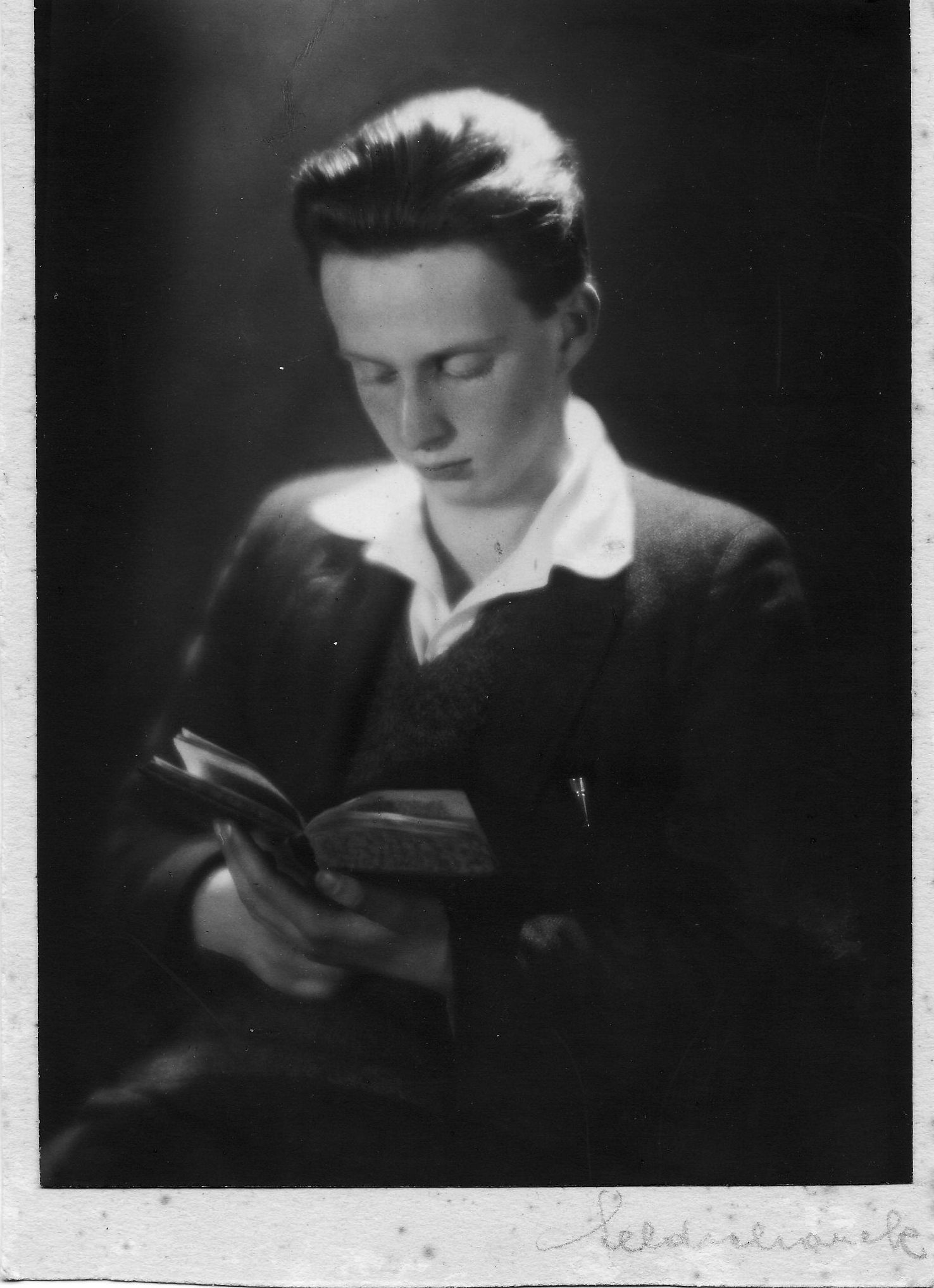
Photos

Source material
Karen M. Brown: Refugee turned Patriot. One Man’s Quest for Security, o.O. 2023.
Wirtschaftsuniversität Wien, Universitätsarchiv, Studierendenkarteikarte.
Wirtschaftsuniversität Wien, Katalog der Hauptbibliothek.
Österreichisches Staatsarchiv, Archiv der Republik, Vermögensverkehrsstelle, Vermögensanmeldung 6069.
Meldeauskunft des Wiener Stadt- und Landesarchivs, GZ MA 8 – B-MEW – 140757/2013.
E-Mails von Prof. Dr. Tim Stern (Sohn von Hans Gerhard bzw. John Stern, Wellington/Neuseeland) an PD Dr. Johannes Koll (WU Wien) vom 11. und 18. Juli 2016.
E-Mail von Karen Brown (brownkm6012@gmail.com) an PD Dr. Johannes Koll (WU Wien) vom 24. November 2023 mit der englischsprachigen Zusammenfassung.
Ann Beaglehole: Jewish Refugees interned during the Second World War, in: Holocaust Centre of New Zealand, http://www.holocaustcentre.org.nz/uploads/1/2/2/4/122437058/jewish_refugees_interned_during_the_war_1.pdf [24. November 2023].
Aliens Emergency Regulations 1940, in: New Zealand Legal Information Institute: Databases: New Zealand Regulations as Made, http://www.nzlii.org/nz/legis/num_reg/aer1940270/ [24. November 2023].
Privatarchiv Tim Stern und Karen Brown (Wellington/Neuseeland).
Lindsay Offer [Tochter von Hans Gerhard Stern]: Stephanie Stern (Mittler), in: Geni, http://www.geni.com/people/Stephanie-Stern/6000000042944759321 [Stand vom 9. Juni 2016, Zugriff: 13. Juni 2018].
Yad Vashem: The Central Database of Shoah Victims' Names, http://db.yadvashem.org/names/search.html?language=en, ID 4737250 (Artur Stern), 4737246 (Anna Stern), 4935025 und 4909573 (Therese Mittler) [4. Juni 2018] sowie 4839105 (Jana Sternova).
Opferdatenbank des Dokumentationsarchivs des österreichischen Widerstands (http://www.doew.at ) zu Josef und Siegfried Mittler [28. Juni 2018].
United States Holocaust Memorial Museum, Holocaust Survivors and Victims Database (http://www.ushmm.org/online/hsv/person_advance_search.php [28. Juni 2018]), Sign. RG-48.012M: Liste vom 14. Februar 1944, erstellt von SS-Standartenführer Dr. Erwin Weinmann.
Niederösterreichisches Landesarchiv, Niederösterreichische Landtafel, Einlagezahl 307.
Ancestry.com: Eintrag zu Sigmund Franz Welwart, http://www.ancestry.com/family-tree/person/tree/119909671/person/112020136786/story?_phsrc=FAa29&_phstart=successSource [1. Dezember 2023].
Michael Wladika: „Arisierung“ und Restitution von Liegenschaften, in: Ders./Oliver Rathkolb/Maria Wirth: Die „Reichsforste“ in Österreich 1938–1945. Arisierung, Restitution, Zwangsarbeit und Entnazifizierung, Wien/Köln/Weimar 2010, S. 159-392.