

Dkfm. Karl Löwy (Lowy)
- Born on: 13.7.1902
- Birthplace: Oggau
- Category: Doctorate program
- Right of domicile: Eisenstadt (Eisenstadt),

The English version is based on a translation by Artificial Intelligence. The authentic version is the German version.
Preliminary remark: Please click here for an English translation.
Vorbemerkung: For a translation into English, please click here.
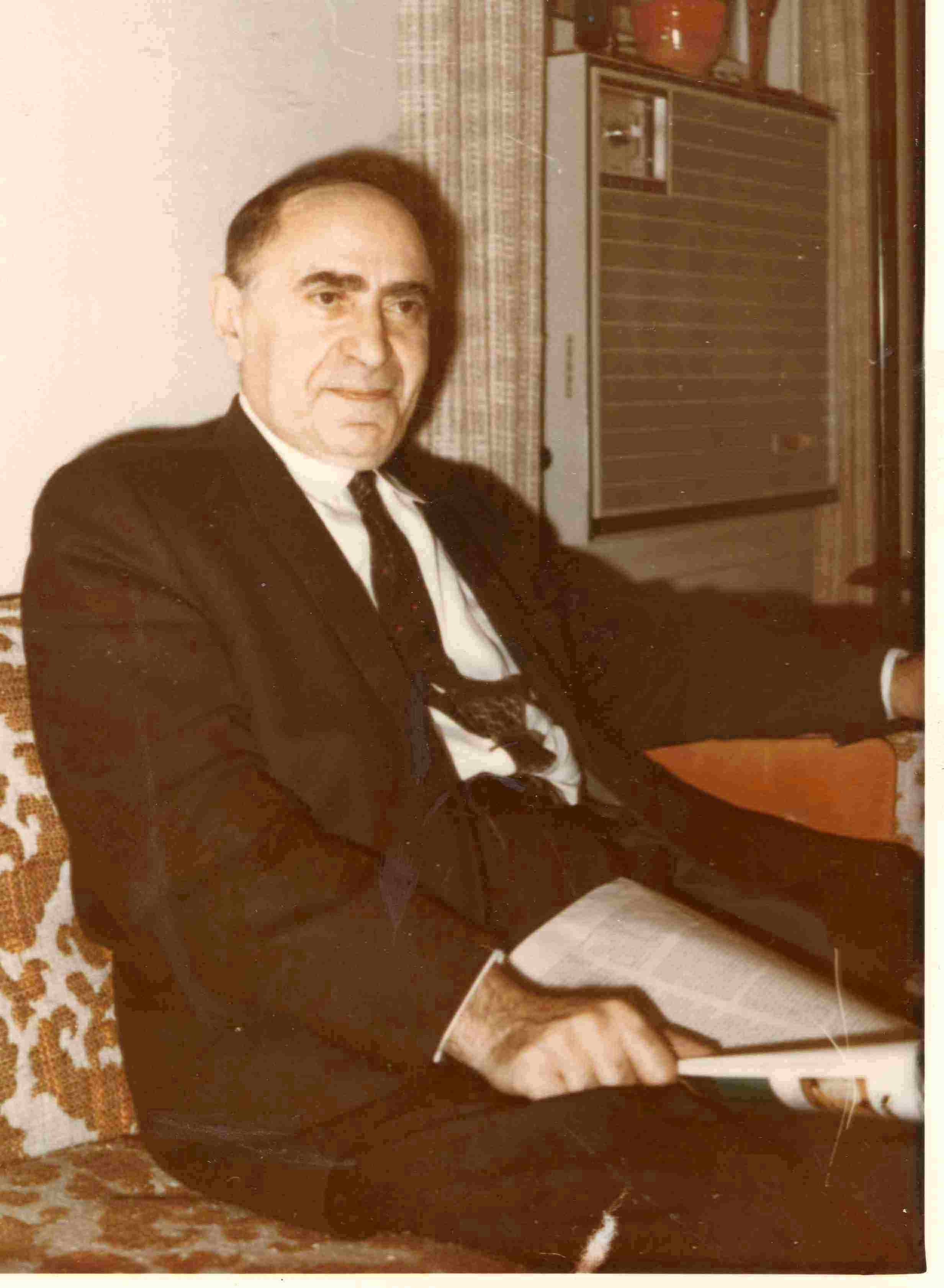
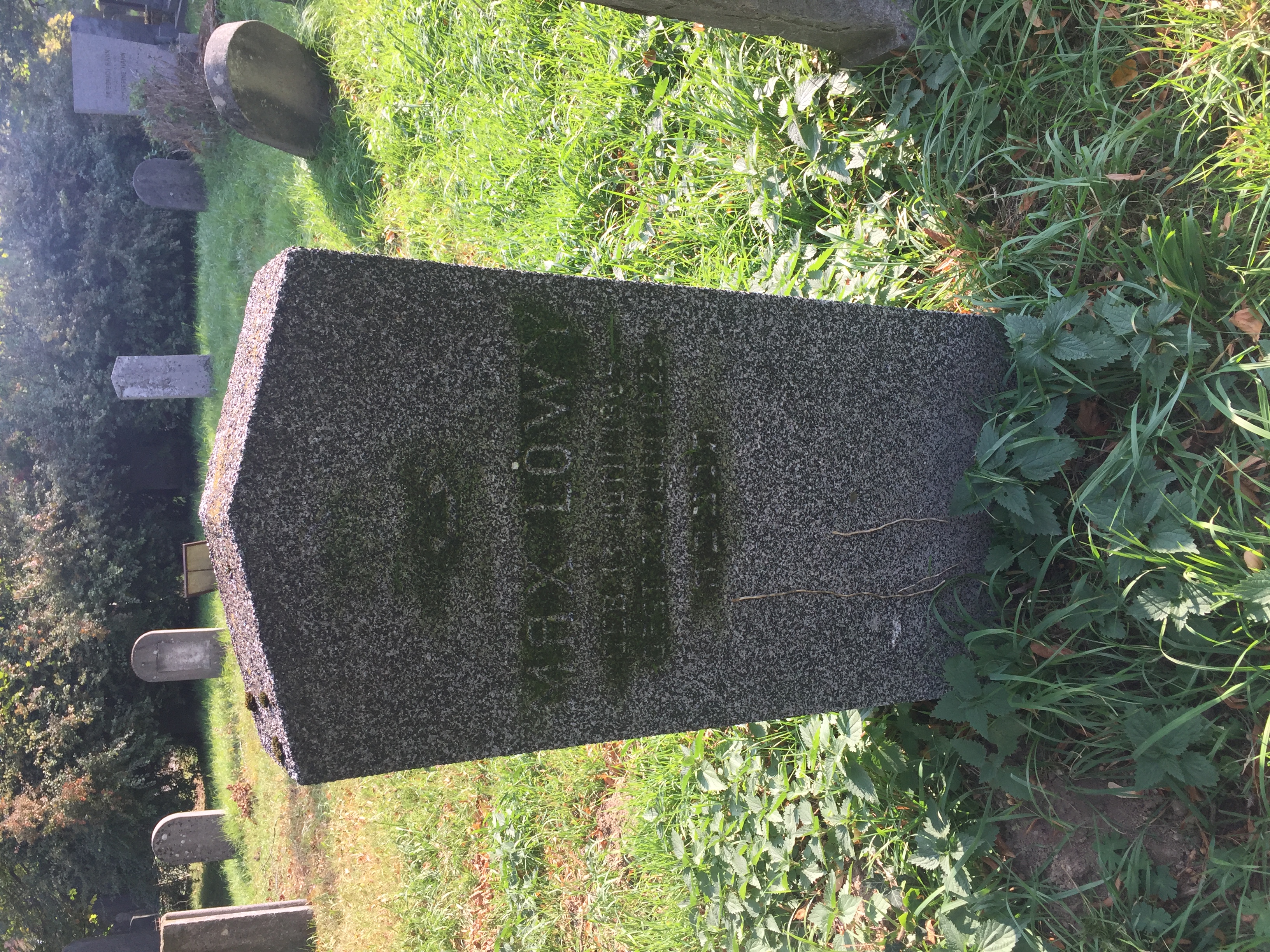
Karl was the son of the antiquities dealer Maria Emma (born on March 23, 1856, in Oslip [Gschies 109], née Werndorfer) and Maximilian Löwy (known as Miksa; born June 13, 1865, in Oggau, died June 23, 1923, at the Wiedner Krankenhaus in Vienna), who had married on June 30, 1891, in Mattersdorf. Karl's father worked in Eisenstadt at the well-known wine shop Wolf.
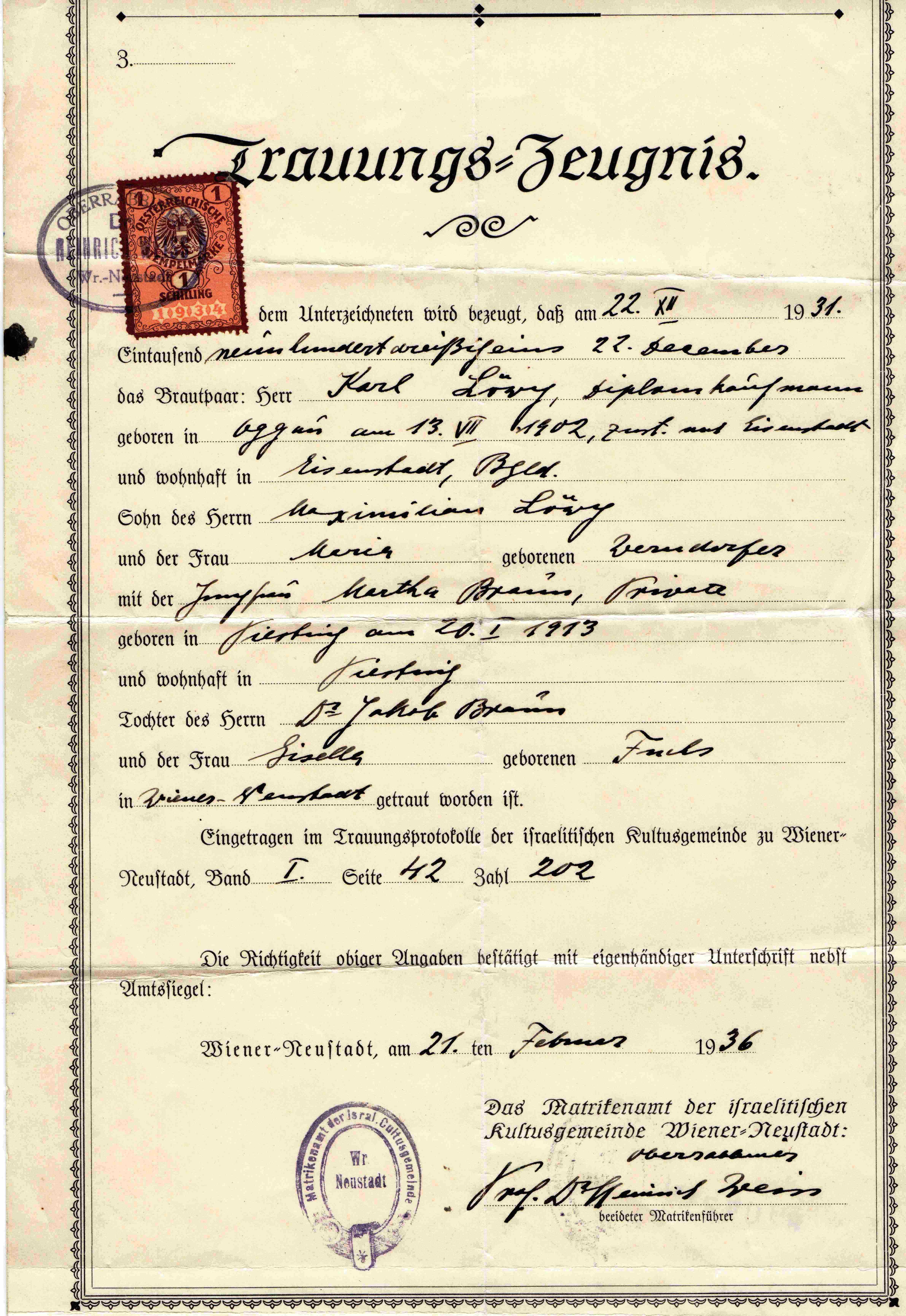
Karl Löwy had one brother, Ignatz (born June 27, 1892, in Oggau), and three sisters: Gisela (1898-1931), Hermine (1897-1975), and Vera (Frieda). On December 22, 1931, Karl married Martha Braun (born January 20, 1913, in Piesting) in Wiener Neustadt.
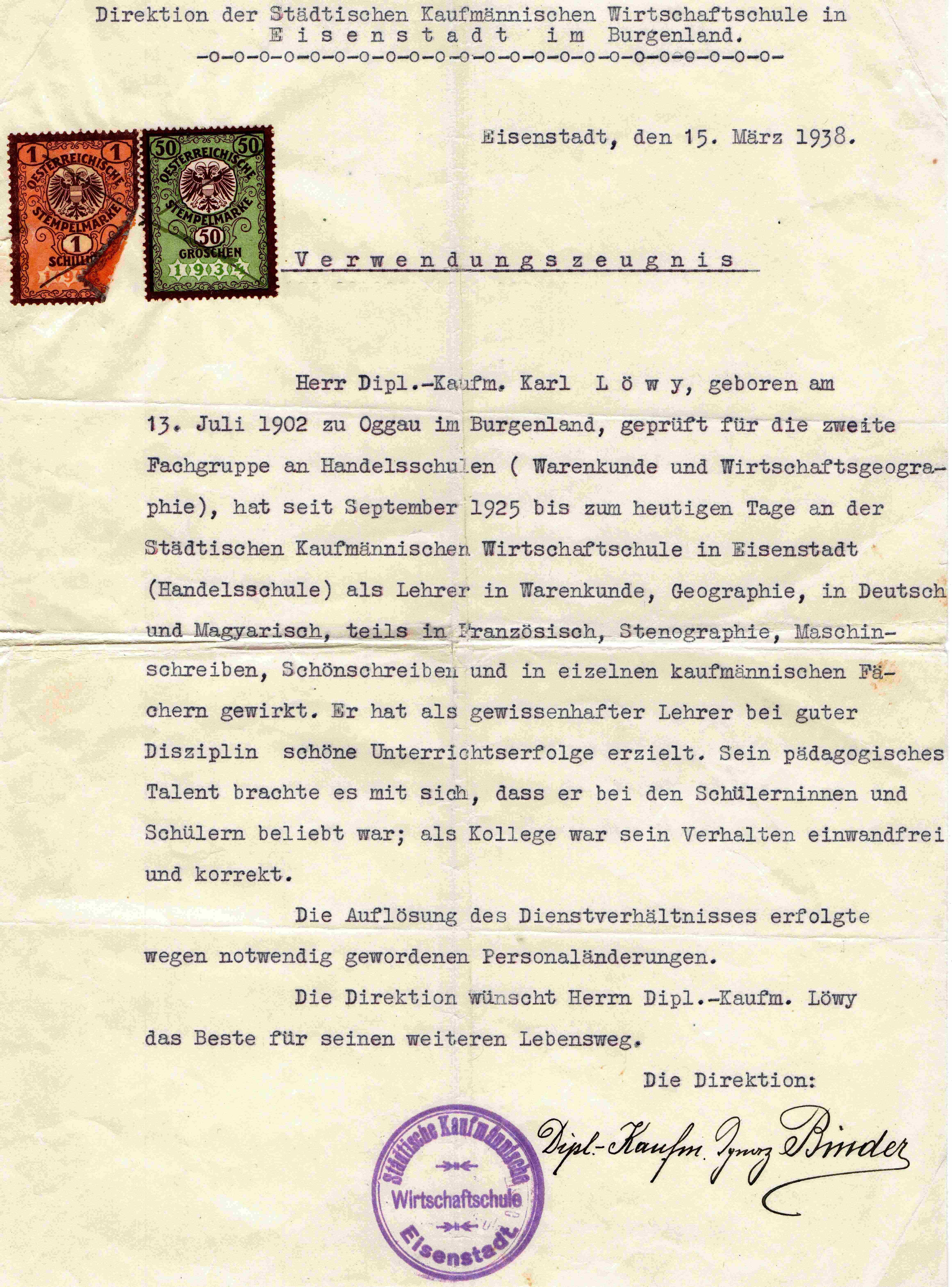
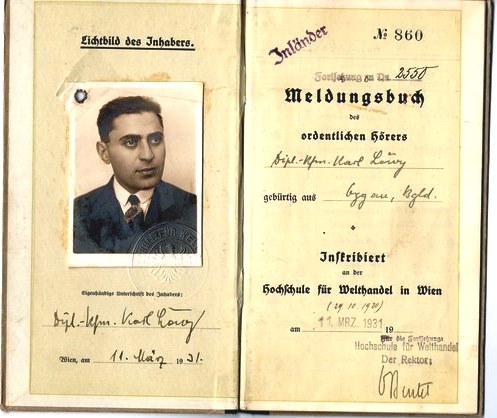
After attending the Commercial College (Höhere HandelsschuleI in Ödenburg/Sopron, Karl Löwy enrolled at the University for World Trade (Hochschule für Welthandel) in Vienna in 1920. Here, he successfully passed the diploma examination on November 20, 1923, after the six semesters included in the diploma program. From September 1925, he taught at the newly founded Commercial College (Kaufmännische Wirtschaftsschule) in Eisenstadt. Likely in connection with this professional activity, he completed the teacher seminar at the University for World Trade in the academic year 1926/27, which was dedicated to the training and further education of teachers at commercial schools. In the summer semester of 1931, Löwy re-enrolled at the 'Welthandel' with the goal of obtaining a doctorate in commerce. He submitted his dissertation Der Weinbau in Österreich. Wirtschaftsgeographische Untersuchungen on January 20, 1938 - just a few weeks before the German Wehrmacht invaded Austria. He had already paid the necessary fees on January 12. Although the reports written by two professors of the University recommended him for admission to the Second Rigorosum, Löwy was banned from participating in the 'strict examination' after the 'Anschluss' of Austria, explicitly citing his Jewish heritage: "da mosaisch zu den Rigorosen nicht zugelassen." Löwy thus belonged to the few Jewish doctoral candidates who were denied the completion of their doctoral studies by the University for World Trade for 'racial' reasons. Furthermore, he lost his position at the Eisenstadt commercial school - "due to necessary personnel changes," as the anti-Semitic 'cleansings' were euphemistically referred to in his job reference from March 15, 1938.
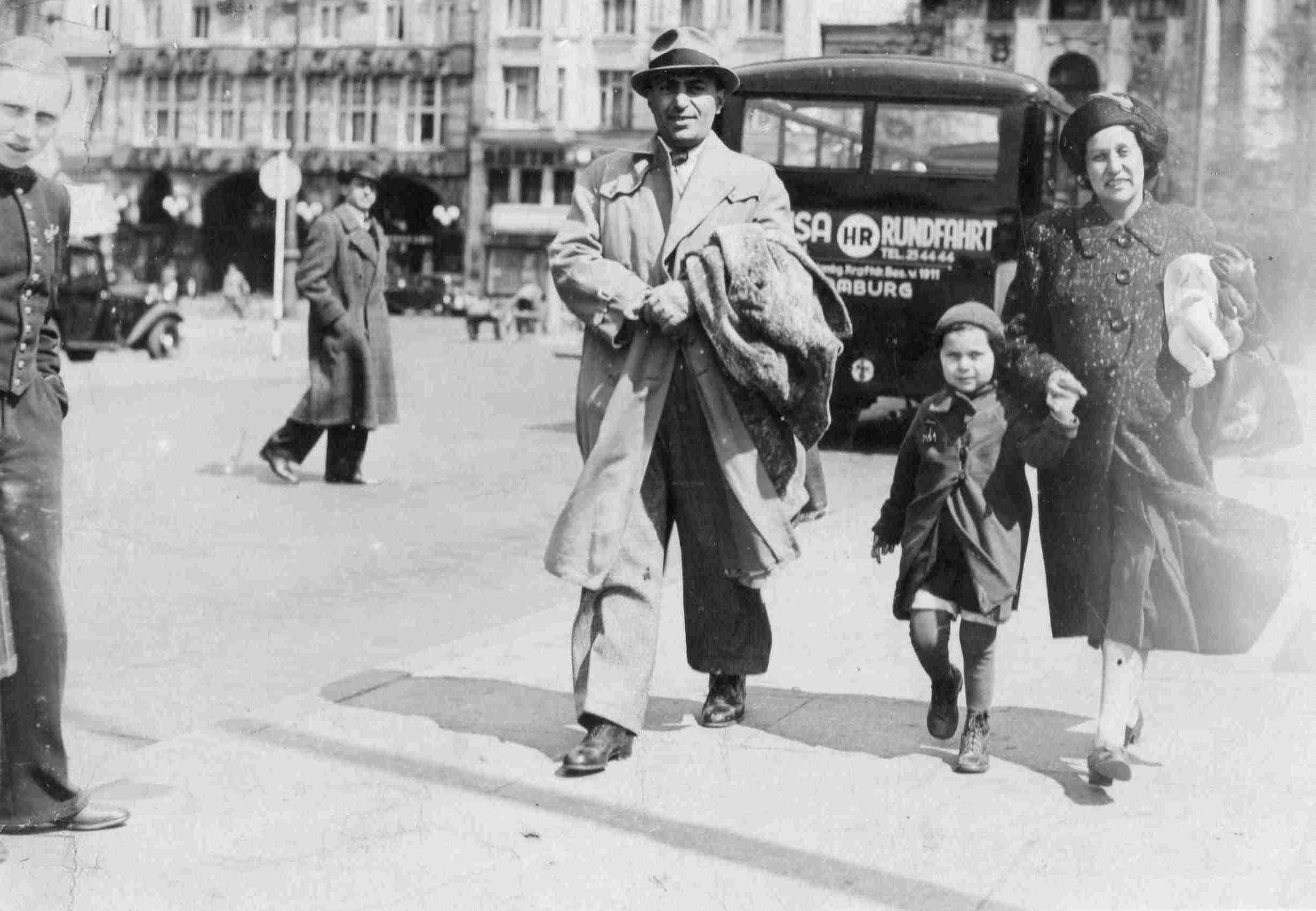
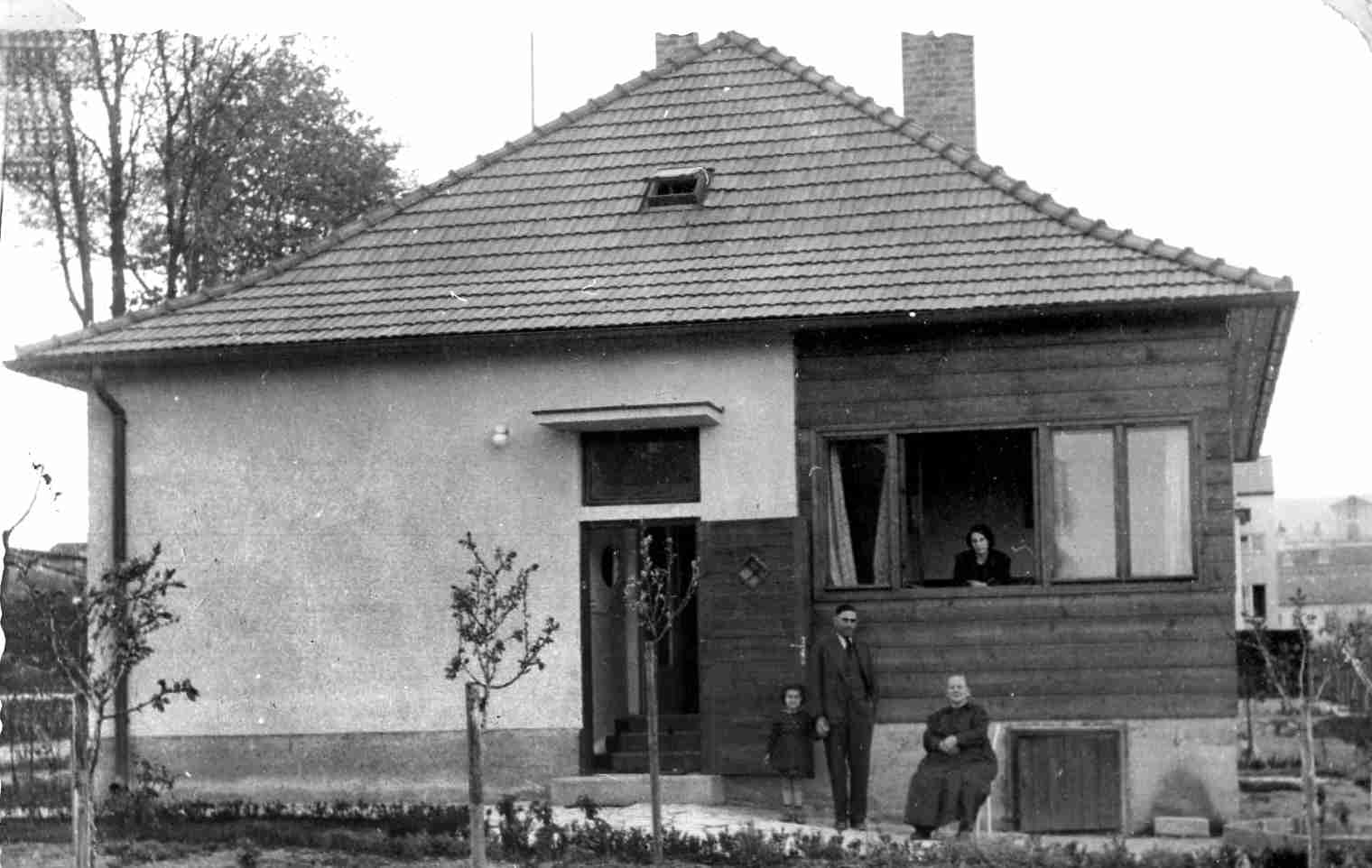
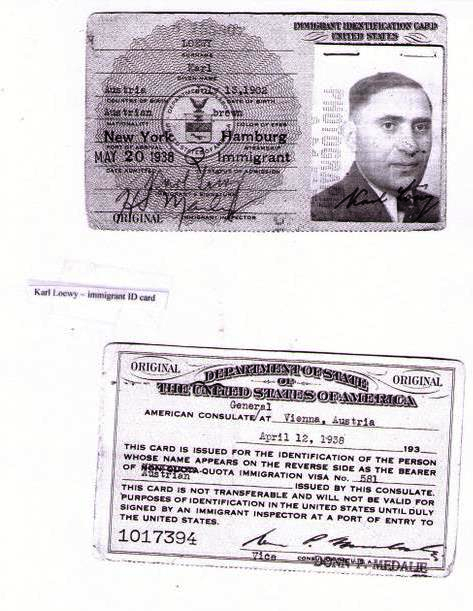
Together with his wife Martha, who was about to give birth to Paul, and their then four-year-old daughter Ilse (born September 2, 1933, in Wiener Neustadt), Karl Löwy managed to obtain visas for entry into the USA on April 12, 1938. Presumably anticipating the impending 'Anschluss,' he had applied for the visas as early as February, and he had sold the house on Ruster Straße, which he had bought with his wife in 1936, just one week before the Wehrmacht's invasion of Austria.
Until their departure to North America, the Löwy family was made life incredibly difficult: Due to his dismissal from the Eisenstadt commercial school, Karl had no income, and the house on Ruster Straße was 'guarded' by Hitler youth until their departure. It is reasonable to assume that Karl and his family faced the same harassments as all other Jews attempting to leave the German Reich at that time. Presumably, the Löwy family also had to pay the so-called 'Reichsfluchtsteuer,' and they had to declare in writing to the Secret State Police that they would never return to Austria. To prevent any existing gold from falling into the Nazis' hands, Martha disposed of it - as she wrote in her autobiography Falling Uphill - in the manure pit.
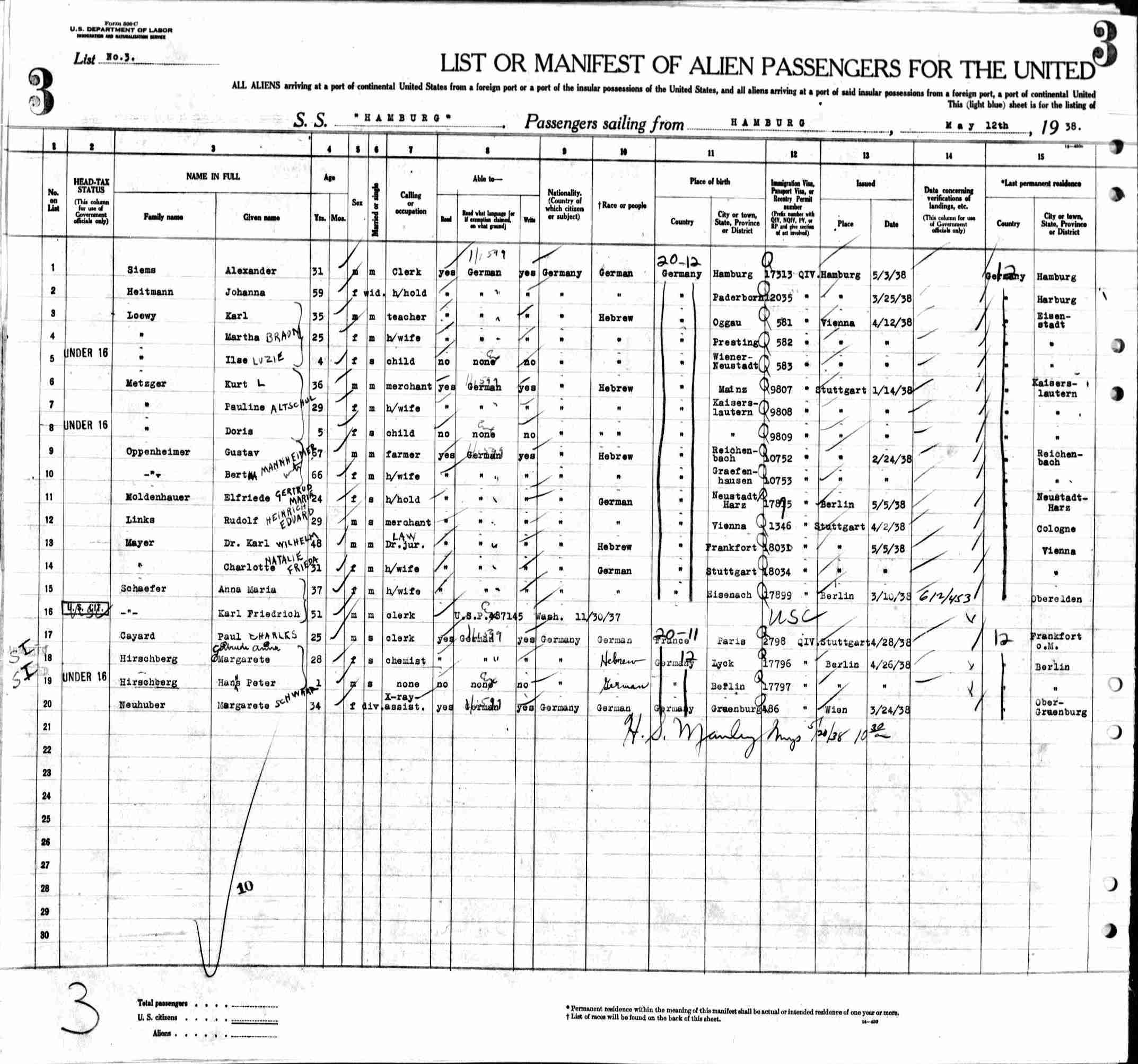
The path into exile initially led the Löwy family across the German Reich to Hamburg. From here, they traveled almost destitute on the S.S. Hamburg, an ocean liner of the Hamburg-America Line, which had been commissioned for overseas voyages in January 1931 by Hapag and was supposed to sink on March 5, 1945, off Sassnitz due to a mine hit (Kludas 1990, pp. 109 and 154), after a week-long overseas journey to New York (May 13 to 20, 1938). Since they had to sell everything of value beforehand, they only had money for food and the forced departure. The family was allowed to bring only eight dollars for the immigration tax per person. They did not even have money to rent deck chairs on the ship. Fortunately, a German family rented chairs and allowed their daughter Doris to share her seat with the roughly same-aged Ilse. At least the Löwy family received permission to ship furniture pieces to North America. As for valuables, Karl and his wife were only allowed to keep their wedding rings and a few pieces of jewelry of little material value. The proceeds from the sale of the house on Ruster Straße in Eisenstadt apparently went to the German Reich.
In the USA, the family name Löwy was Americanized to Lowy. In New York, Karl and his family were welcomed by his sister Hermine (Minna), who was married to Heinrich Schipper. It was Hermine's husband's family who financed the crossing for Karl and his family. Nevertheless, the reception of Karl and his family was not without its burdens: Heinrich was a member of the German-American Bund, which, with its 25,000 members, was not only friendly to Germans but also aligned with National Socialism and structured according to the 'Fuhrer principle' (Schenderlein 2017, p. 103). More than seven and a half decades later, Karl's daughter Ilse recalls that the Jewish refugee family from Eisenstadt was received by Hermine with the Nazi salute (Email dated November 13, 2014)!
At least Karl was now safe with his family, which had grown with the birth of Paul. His mother-in-law Gisela Braun (born November 10, 1875, in Sopron/Ödenburg, maiden name Fuchs) and her sister-in-law Rosa Rado (born May 6, 1881, maiden name Braun) managed to leave the Greater German Reich as well - albeit significantly later than Karl and his family and under conditions of intensified persecution policies.
Until their emigration, the sisters-in-law lived in Piesting. Rosa had settled there with her children Hans, Elisabeth, and Margarete after her husband Berthold Rado took his own life following a diagnosis of a brain tumor in March 1910. Initially, Rosa and her three children lived with her brother Jakob and his wife Gisela, who, as a trained dentist, introduced Rosa to dentistry. Subsequently, Rosa became independent with her own practice at Wöllersdorfer Straße 7, the Altelier Rosa Rado. After the 'Anschluss' of Austria, she was forced to auction her house in Piesting. The successful bidder was the roofer Ernst M., who had been a member of the then-still-illegal NSDAP and the National Socialist Motor Corps since November 1934 and acted as cell leader of the NSDAP local group in Piesting from 1938. On November 10, 1938, the day after the so-called Reich Pogrom Night, Rosa Rado was robbed by the gendarmerie and SS of 1,000 Reichsmarks, furniture, and jewelry. Additionally, her practice was closed, and several medical instruments, parts of the apartment layout, and laundry were confiscated. In the spring of 1939, Rosa managed to emigrate to Palestine, where her son Hans was already living. As historian Werner Sulzgruber (2013, p. 99) reports, Rosa initiated a restitution claim from Tel Aviv after World War II. In 1950, she reached a settlement with the aforementioned roofer Ernst and his wife Hilde M.: In exchange for the payment of 10,000 schillings, she recognized the validity of the auction from 1939.
Together with her husband, physician Dr. Jakob Braun (born June 22, 1872, in Wiener Neustadt, died September 22, 1936), Gisela had also been a respected citizen of Markt Piesting until the 'Anschluss'; she had worked here as a dentist. In the course of the aforementioned Reich Pogrom Night, all her valuables and money were stolen, leaving the heavily diabetic widow almost destitute. Only in 1939 did she receive her visa for Great Britain. On August 31, 1939, she managed to leave Vienna; just a day before Germany launched its attack on Poland, she succeeded in escaping to London. Unlike her daughter Martha and her son-in-law Karl, she was not allowed to take any personal valuables into exile; like her sister-in-law Rosa, even her wedding ring was taken from her before her departure. In October 1941, Gisela received a visa for North America. She crossed the Atlantic on a Greek freighter that had become a hard-fought war zone in December of the same year due to Hitler's declaration of war on the USA. In January 1942, she arrived in Canada - "after much drama," as her granddaughter Ilse Nusbaum (2 September 1933 to 4 May 2026) recalls (Email dated October 7, 2014). Finally, she made her way to the USA, where she lived in the winter months with Karl and Martha Löwy and in the summer months with her son Dr. Rudolf Braun (born August 25, 1902) and his family. Rudolf had taken over the medical practice in Piesting after his father's death but had found it necessary, in light of the 'Anschluss,' to sell the house and property in Piesting with his mother Gisela. In the summer of 1938, he and his wife Liesel (nee Hertz) and their son Peter (born 1935 in Piesting) crossed to New York by ship. As a doctor, he then worked in Connecticut, first in Bridgeport, later in Fairfield. In this American state, Rudolf, who passed away on September 27, 1986, as well as his mother Gisela, who died in 1954 at the age of 79, were buried.
Along with Dr. Rudolf Braun and his family, his younger brother Josef (born February 29, 1904, in Piesting), his wife Edith (born August 2, 1906, in Vienna, maiden name Gonda), and son Fritz (now: Fred, born 1932 in Vienna) emigrated to the USA from Antwerp. Previously, Josef had been forced into the notoriously infamous 'Reibepartien' after the 'Anschluss' of Austria, under which Jews were made to scrub pavements by the Viennese mob under the most degrading conditions. His business Sportfex, where Josef had previously sold sports equipment and clothing, was smeared with the label "Jew" and later 'Aryanized'—that is, expropriated without compensation by the National Socialist state and transferred to a non-Jewish owner. On July 10, 1938, Josef fled - as mentioned together with his brother Rudolf's family - to the USA. The brothers and their families were supported by Bertha Breiner, an aunt on their mother's side, who lived in Bridgeport. After initial difficulties, Josef was able to establish himself professionally in America. As chief engineer, he later worked in the field of urban planning, construction, and product development.
Several other family members of Karl Löwy and his wife were forced into exile or killed after the 'Anschluss.' Among the former was the private clerk Alexander Braun (born March 21, 1871, in Kobersdorf, died 1959 in Israel), one of the four brothers of Dr. Jakob Braun. Alexander had been president of the Israelite Cultural Community of Baden from 1919 to 1930. In 1939, he managed to flee to Palestine with his wife Hedwig (born 1881, maiden name Wotiz), who had been president of the Israelite Women's Charitable Association of Baden until the 'Anschluss' of Austria.
Alexander's brother Leopold (born 1876 in Wiener Neustadt) escaped with his wife Louise (born Wotiz) from Baden to Mexico. Their six children were also able to find safety. They survived the Holocaust either by going underground in Vichy France or through emigration. However, the husband of daughter Helene, Ludwig Lackenbacher (born February 18, 1904, in Vienna), was arrested on July 17, 1942, during a notorious raid in Paris, the "Rafle du Vélodrome d'Hiver," and deported through the French camp Pithiviers to Auschwitz-Birkenau/Oświęcim; he was killed in this National Socialist extermination camp on August 26, 1942. Helene, on the other hand, managed to escape with her children to Vichy France, from where she eventually made her way to Spain and Portugal and finally to Mexico.
Karl's brother, Ignatz Löwy, was murdered in Auschwitz-Birkenau after being deported in March 1943 from Vienna to the Theresienstadt ghetto and then to Auschwitz-Birkenau at the end of September 1944.
Karl and Ignatz's mother, Maria Emma, went to Belgrade during World War II, where Vera (known as Frieda) Jovanovich lived. She died during the bombing of the Yugoslav capital, which the fanatical General Alexander Löhr ordered in April 1941.
Thus, not only the former 'Welthandel' doctoral candidate Karl Löwy with his wife and two children were victims of the Nazi regime. Many other relatives on both paternal and maternal sides, who had been engaged in Austrian society in social, economic, or cultural fields until March 1938, were robbed of their property and freedom after the 'Anschluss' of Austria and forced into exile or killed.
Karl Löwy initially found work in a department store in Detroit after crossing to the USA. Here, he was unloading boxes in a warehouse. English became the standard language for the Löwy family not only at work and in public but also in private life. At Wayne State University in Detroit, Karl earned a master's degree and subsequently worked as a business examiner. Just before he planned to travel for the first time back to Austria after the expulsion in 1938 in the fall of 1970, he suffered a heart attack in August. Treatment at the Detroit Plymouth General Hospital could only delay his death for a few weeks. On October 6, 1970, Karl Löwy died as a result of the heart attack. A day later, he was buried at the Hebrew Memorial Park Cemetery in Mount Clemens (Michigan). His wife was to outlive him by almost 38 years: She passed away on March 1, 2008, in Los Angeles at the age of 95.
Author: Johannes Koll
Postscript: On July 26, 2017, PD Dr. Johannes Koll presented the first copy of the collection he edited "Säuberungen" an österreichischen Hochschulen 1934–1945. Voraussetzungen, Prozesse, Folgen (Böhlau-Verlag: Wien/Köln/Weimar 2017) to Ilse Nusbaum, the daughter of Karl Löwy. With her inquiry to the Vienna University of Economics about the whereabouts of her father's dissertation, she has initiated the memorial project that resulted in the memorial book.
Downloads
Photos

Source material
Index der Israelitischen Matriken des Burgenlandes 1832-1895, Nr. 14966 (Maria Werndorfer), 8463 (Maximilian Löwy) und 8390 (Ignatz Löwy), alle Einträge nach http://www.genteam.at [17. Mai 2018].
Israelitische Kultusgemeinde Wien, Friedhofs-Datenbank zu Max Löwy (https://secure.ikg-wien.at/db/fh/ ) [4. November 2018].
Wirtschaftsuniversität Wien, Universitätsarchiv, Karteikarte und Ordner "Allgemeine Akten 1938", Zl. 154/38.
Handelsakademie Eisenstadt: Haupt- und Klassenkatalog 1937/38.
Josef Klampfer: Das Eisenstädter Ghetto (= Burgenländische Forschungen, Bd. 51), Eisenstadt 1965, S. 78.
Österreichisches Staatsarchiv, Archiv der Republik, Finanzen, HF, Zl. 383.
Susanne Heim (Bearb.): Deutsches Reich 1938 – August 1939 (= Die Verfolgung und Ermordung (= Die Verfolgung und Ermordung der europäischen Juden durch das nationalsozialistische Deutschland 1933-1945, Bd. 2), München 2009, Dok. 161, S. 465 f.
Sulzgruber, Werner: Lebenslinien. Jüdische Familien und ihre Schicksale. Eine biografische Reise in die Vergangenheit von Wiener Neustadt, Wien/Horn 2013.
Otto Gertzen: Kurzbiografie von Rudolf Braun. Flurgespräche, o.O. 2017, http://www.flurgespraeche.de/wp-content/uploads/2017/09/Kurzbiografie_Braun-Karl.pdf [5. April 2024].
Jewish History Baden, http://jewishhistorybaden.com/life [24. November 2014].
Opferdatenbank des Dokumentationsarchivs des österreichischen Widerstands (http://www.doew.at ) und The Central Database of Shoah Victims' Names (http://db.yadvashem.org/names/search.html?language=de ) [30. August 2013].
Ilse Nusbaum: My father's dissertation, in: National Fund of the Republic of Austria, http://www.nationalfonds.org/ilse-nusbaum.html [2. März 2018].
Martha Lowy/Ilse Nusbaum: Falling Uphill. A Dual Mirror, New York/Bloomington 2009.
Interview mit Ilse Nusbaum in Die Presse vom 9. Mai 2014: http://diepresse.com/home/zeitgeschichte/3802937/Wir-kamen-mit-dem-Leben-davon [10. Mai 2014].
David Suissa: A Father's Day gift of Justice, in: Jewish Journal, 19.-25. Juni 2015, http://www.jewishjournal.com/david_suissa/article/a_fathers_day_gift_of_justice [22. Juni 2015].
E-Mails von Ilse Nusbaum (Los Angeles) an PD Dr. Johannes Koll (Wirtschaftsuniversität Wien) zwischen 7. Oktober 2014 und 22. Juni 2015.
Anne Schenderlein: German Jewish „Enemy Aliens“ in the United States during the Second World War, in: Bulletin of the German Historical Institute (Washington DC), 60 (2017), S. 101-116.
Arnold Kludas: Die Geschichte der deutschen Passagierschiffahrt, Bd. 5: Eine Ära geht zu Ende. 1930 bis 1990, Hamburg 1990.