

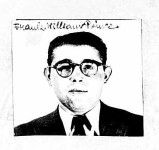
Franz Wilhelm Prinz (später Frank William Prince)
- Born on: 1.12.1915
- Birthplace: Wien
- Category: Diploma program
- Right of domicile: Wien (Wien), Österreich
- Citizenship: Österreich
Family Background, School, and University
Franz (Wilhelm) Prinz was born on December 1, 1915, to Maria (also known as Marie) and Isidor Prinz, who had married the previous year in St. Pölten. On September 28, 1919, a brother, Max, was born to him.
Franz Prinz attended an unknown lower secondary school as well as a Commercial Academy in the 8th district of Vienna, the Handelsakademie VIII at Hamerlingplatz 5–6 in Vienna, where he earned his high school diploma. He also worked at the butcher shop his father ran at Müllnergasse 2 (9th district of Vienna) and completed an apprenticeship as a photographer. In the winter semester of 1936–37, he enrolled at the University for World Trade (Hochschule für Welthandel). There, he pursued the diploma program for three semesters until the winter semester of 1937–38. During his studies, he lived with his parents at Müllnergasse 3, which was located diagonally across from his father’s butcher shop; until December 1931, the family lived in apartment 28 of this building, thereafter in apartment 31. However, he was unable to achieve his goal of earning a degree in business administration from the 'Welthandel': With the 'Anschluss' of Austria to the 'Third Reich' (March 1938), it became clear to the Jewish student early on that enrolling for the summer semester of 1938 was pointless. In fact, shortly after seizing power, the Nazis introduced a numerus clausus for Jewish students, and after the pogrom of November 9–10, 1938, they were even completely barred from entering the university campus (see Koll 2017, chap. 2). The last exam that Franz Prinz took at the 'Welthandel' was on January 17, 1938—that is, before the German Wehrmacht marched into Austria.
Consequences of the 'Anschluss' for family members
Also in other respects, the 'Anschluss' had dramatic consequences for Franz and his family. In the summer of 1938, his father’s butcher shop was confiscated in the pseudo-legal manner typical of the Nazi regime. In his asset declaration of July 1938, he himself listed its value as 6,902.20 Reichsmarks, while the Vermögensverkehrsstelle—a state agency tasked with confiscating assets—revised the value down to 1,230 Reichsmarks. The competent authorities appointed the Nazi Johann (also known as Hanns or Hans) Hohleichl as the provisional administrator (kommissarischer Verwalter) responsible for the sale or closure of the business. As recently as November 1937, Hohleichl—along with 28 other National Socialists—had been charged before the Vienna Regional Court under the State Security Act for distributing propaganda material advocating the annexation of Austria to the 'Third Reich' and the Nazification of Austria; he had done so as a member of the Vienna-Rudolfsheim local NSDAP chapter, in defiance of the ban on the party's activities issued by the Austrian federal government in June 1933. After Hohleichl had already been running his own business at Schrotzbergstraße 6 (2nd District of Vienna), he took over Isidor Prinz's butcher shop as provisional administrator following the actual 'Anschluss'. Furthermore, between July 1938 and February 1939, he served as provisional administrator for the butcher shop owned by Siegmund Kornmehl (born September 16, 1869) at Berggasse 19 (9th District).
A total of six people applied to take over the business of Isidor Prinz, whose annual revenue, according to an appraisal, amounted to 80,000 Reichsmark. Initially, Party member August Brenner (residing at Pfeilgasse 18/1/9, 8th District) was awarded the contract. However, this master butcher did not prove able to run Isidor Prinz's butcher shop in addition to his own business at Kettenbrückengasse 18 (4th District). As a result, Prinz' shop remained closed for months. Next in line was butcher's assistant Rudolf Sittner (residing at Baumgasse 37/5, 3rd district). He acquired the business at Müllnergasse 2 for the modest price of 725 Reichsmarks, though Isidor Prinz effectively had no access to these funds because they were deposited into a blocked account. For Sittner, the purchase of the butcher shop at Müllnergasse 2 initially proved to be a bargain, even after paying the so called 'de-Jewification fee' (Entjudungsauflage) of 1,000 Reichsmarks—a charge imposed by the tax authorities beginning in the fall of 1938 to recoup the difference between the market value and the significantly lower purchase price. However, even Sittner found himself unable to run Isidor Prinz's business. The shop remained closed, and in November 1939, Sittner withdrew from the purchase. The authorities revoked the license for the butcher shop, which had in fact been closed for quite some time. Thus, due to the incompetence of the 'Ariseurs', Isidor Prinz's life's work was destroyed within a few months.
In addition to his business, Franz's father also lost his assets: securities worth more than 8,000 Reichsmarks, savings deposits, and valuables were frozen by the Reich Flight Tax Office (Reichsfluchtsteuerstelle). Furthermore—most likely without compensation—both Siegmund Kornmehl and Isidor Prinz had their motor vehicles confiscated, which they had owned privately or for their respective businesses since at least 1937: In Kornmehl's case, these included a Gräf & Stift passenger car with the license plate A16303 and a Fiat truck with the license plate A50314; in Prinz's case, a Steyr passenger car with the license plate A29046, which Franz and Max had also driven.
Franz's mother, too, was stripped of her assets by the Nazi plundering state. The house at Hauptstraße 11 in Scheibbs (Lower Austria, during the Nazi period Lower Danube), which Maria Prinz and her sister Ida Hand (born June 5, June 1891 in Bischofstetten) had each owned half of since December 1925, following the death of their mother Franziska Greger—and which they themselves valued at 10,000 Reichsmarks—was incorporated into the German Reich on March 18, 1943, on the basis of the 11th Implementing Regulation of the Reich Citizenship Law (Elfte Verordnung zum Reichsbürgergesetz). The National Socialist plundering state had granted itself this quasi-legal basis in November 1941 in order to appropriate the assets of those Jews whom it had itself deported and killed.
This was precisely the case with the Prinz and Hand families. Both Franz Prinz's parents and his aunt Ida and her family were victims of the Shoah. Isidor Prinz (born March 10, 1885, as son of Feit Ferdinand and Sali Prinz in Holitsch/Holič) and Maria (born March 26 or 28, 1887, as daughter of Karl and Franziska Greger in Bischofstetten) moved on October 29, 1940, from their apartment at Müllnergasse 3 to Servitengasse 5/7 (also in the 9th district); it is unknown whether they had to give up their previous apartment for financial reasons or by order of the authorities. In any case, on September 14, 1942, the Prinz couple were transported from Servitengasse to Vienna's Aspangbahnhof and, from there, were deported along with a total of 1,000 Jews at 7:08 p.m. on train Da 227 to Maly Trostinec. The registration documents for this journey downplayed the situation, simply stating: "Minsk with wife." Presumably immediately after the train arrived southeast of Minsk—four days after their departure from Vienna—the parents of Franz and Max were shot by members of the Waffen-SS and the Schutzpolizei in the small forest of Blagowschtschina or suffocated in gas vans. Ida Hand, her husband Martin (born June 17, 1882, in Vienna), an engineer employed by the Austrian Federal Railways, and their daughter Ilse (born February 19, 1921, in Scheibbs) were sent to their deaths on the same deportation trains from Hollandstraße 14/13 (2nd District).
Concentration camp Dachau
Franz, too, was confronted with the brutal and inhuman face of National Socialism: Just a few days after the pogroms of November 9 and 10, 1938—euphemistically referred to by the Nazis as Reichskristallnacht—he was deported to the Dachau concentration camp as a so-called Schutzhaftjude (Jew in 'protective' custody). There is no record of when he was released. Most of the approximately 3,000 Jewish men from Vienna who were deported to Dachau during the wave of arrests in November 1938 were not released until sometime during the first half of 1939, and only on the condition that they leave the 'Greater German Reich' within 14 days (Botz 2008, p. 522 ff.).
Emigration: Via the United Kingdom to the USA
This was precisely what Franz Prinz had been striving for long before. As early as May 1938, he had told the Jewish Community of Vienna that he intended to emigrate to Australia together with his brother Max, who had specialized in radio and electrical engineering, with the goal of "finding a position in any company relevant to the skills I have acquired, preferably in an export company [,] ideally one involved in the meat or radio industry." (MyHeritage: Franz Prinz’s emigration application from May 1938)
Instead of emigrating to Australia, Franz and Max initially moved to Great Britain. In Richborough, in southern England (County of Kent), the two brothers were housed in what was known as Kitchener Camp. This was a reception and transit camp for persecuted Jews from the German Reich, where another Jewish student from the University for World Trade, Alfred Diamant, was already staying at that time. From there, Franz—presumably together with his brother—traveled to the United States aboard the S.S. Voldendam. The ship, operated by the Holland-America Line, departed from Southampton on December 19, 1939, and arrived in New York on December 30.
In the United States, Franz and Max found lodging at 149 Whitney Avenue in Bridgeport, Connecticut, with the Jewish Heyum family. Otto Heyum, a butcher, his wife Jennie, and their children Ruth Babette, Paula, and Herman were originally from the Rhineland village of Dromersheim (near Bingen am Rhein) and had also fled to the U.S. to escape Nazi terror. While in exile in the United States, the Prinz brothers Americanized their names: Franz Wilhelm henceforth called himself Frank William Prince, his brother Max (also known as Mac or Mack) called himself James Price (also known as Mac or Mack James Prince). Both found work (Mac, for example, at the enterprise City Lumber), and both served in the U.S. armed forces during World War II; in this way, they contributed to the liberation of Europe from the Nazi regime. Eventually, both Frank and Mac became U.S. citizens.
In late November 1946, Frank and Max filed a claim from Bridgeport seeking the restitution of ownership rights to the aforementioned house belonging to their mother and aunt in Scheibbs, as well as their parents' looted assets. Four years later, the competent Regional Finance Directorate for Vienna, Lower Austria, and Burgenland granted the application on the basis of the First Restitution Act (Erstes Rückstellungsgesetz) of July 26, 1946. The decision became final on December 12, 1951.
Franz/Frank, who was married to Ruth, last lived at 112 Lounsbury Road in Fairfield. He died on October 4, 2009, at the age of 93. Four days later, he was buried at the Congregation B’nai Israel Cemetery (201 Kings Highway East).
His brother Max, who had been married to Jane Slade Prince (born November 30, 1924, in East Providence, Rhode Island, the daughter of Benjamin Howard and Bessie L. Slade, who died on December 11, 2017, in South Kingstown), and had three children with her (William, Mary-Anne, and Russell), had already passed away on October 8, 2001, at the age of 82. Max was laid to rest at New Fernwood Cemetery in South Kingstown (3071 Kingstown Road). On December 15, 2017, Max's wife Jane was also laid to rest there.
Author: Johannes Koll
Source material
Genteam.at: Index der jüdischen Matriken Wien und NÖ, http://www.genteam.at/de/ [5. Mai 2026].
Wirtschaftsuniversität Wien, Universitätsarchiv, Studierendenkarteikarte Franz Prinz.
Johannes Koll: „Da mosaisch zu den Rigorosen nicht zugelassen“. Verfolgung und Vertreibung von Studierenden an der Wiener Hochschule für Welthandel nach dem ‚Anschluss‘ Österreichs, in: Ders. (Hrsg.): „Säuberungen“ an österreichischen Hochschulen 1934–1945. Voraussetzungen, Prozesse, Folgen, Wien/Köln/Weimar 2017, S. 197-241.
Österreichisches Staatsarchiv, Archiv der Republik, Entschädigungs- und Restitutionsangelegenheiten, Vermögensverkehrsstelle, Vermögensanmeldungen Nr. 39858 (Isidor Prinz, 12. Juli 1938).
Neunundzwanzig Nationalsozialisten vor Gericht, in: Kleine Volks-Zeitung, 83. Jg., Nr. 320 (laufende Nummer 29667) vom 20. November 1937, S. 8-10.
Bundesgesetz zum Schutz des Staates (Staatsschutzgesetz), in: Bundesgesetzblatt für den Bundesstaat Österreich, 55. Stück vom 11. Juli 1936, Nr. 223, S. 455-457, https://alex.onb.ac.at/ [20. Mai 2026].
Verordnung der Bundesregierung vom 19. Juni 1933, womit der Nationalsozialistischen Deutschen Arbeiterpartei (Hitlerbewegung) und dem Steirischen Heimatschutz (Führung Kammerhofer) jede Betätigung in Österreich verboten wird, in: Bundesgesetzblatt für die Republik Österreich, 74. Stück vom 20. Juni 1933, Nr. 240, S. 569, https://alex.onb.ac.at/ [20. Mai 2026].
Zentralblatt für die Eintragungen in das Handelsregister in Österreich, 37. Jg., Nr. 37 vom 14. September 1938, S. 759, Nr. 11.539 zum Unternehmen von Isidor Prinz.
Zentralblatt für die Eintragungen in das Handelsregister in Österreich, 37. Jg., Nr. 32 vom 10. August 1938, S. 656, Nr. 9755 zum Unternehmen von Siegmund Kornmehl.
Zentralblatt für die Eintragungen in das Handelsregister in der Ostmark, 38. Jg., Nr. 10 vom 08.03.1939, S. 173, Nr. 3385 zum Unternehmen von Siegmund Kornmehl.
Österreichisches Staatsarchiv, Archiv der Republik, Entschädigungs- und Restitutionsangelegenheiten, Vermögensverkehrsstelle, Gew. 1893 zur „Arisierung“ des Unternehmens von Isidor Prinz.
Technisches Museum Wien: KFZ-Datenbanken, http://www.technischesmuseum.at/kfz-datenbanken [4. Mai 2026].
Österreichisches Staatsarchiv, Archiv der Republik, Entschädigungs- und Restitutionsangelegenheiten, Vermögensverkehrsstelle, Vermögensanmeldungen Nr. 39857 (Maria Prinz, 12. Juli 1938.
Österreichisches Staatsarchiv, Archiv der Republik, Entschädigungs- und Restitutionsangelegenheiten, Finanzlandesdirektion 18977.
Elfte Verordnung zum Reichsbürgergesetz (25. November 1941), Reichsgesetzblatt Teil I, 1941, S. 722-724, https://alex.onb.ac.at/ [26. Juni 2026].
Meldeauskunft des Wiener Stadt- und Landesarchivs, GZ MA 8 – B-MEW-664894-2026.
Opferdatenbank des Dokumentationsarchivs des österreichischen Widerstands, http://www.doew.at [5. Mai 2026], Einträge zu Isidor und Marie Prinz sowie zu Ida, Martin und Ilse Hand.
memorbuch – Juden in St. Pölten, Einträge zu Isidor und Marie Prinz, http://www.juden-in-st-poelten.at/de/personen/memorbuch/isidor-prinz und http://www.juden-in-st-poelten.at/de/personen/memorbuch/marie-prinz [5. Mai 2026].
Arolson Archives: KZ Dachau, Zugangsbuch für den Zeitraum zwischen 12. und 17. November 1938, Nr. 26336.
Gerhard Botz: Nationalsozialismus in Wien. Machtübernahme, Herrschaftssicherung, Radikalisierung 1938/39, Wien 2008.
MyHeritage.at: Österreich, Wien, Jüdische Auswanderungsanträge 1938-1939: Antrag von Franz Prinz vom Mai 1938 bei der Auswanderungsabteilung der Fürsorge-Zentrale der IKG Wien, Fragenbogen Nr. 12685, http://www.myheritage.at/ [4. Mai 2026].
Ancestry.com: 1939, Register für England und Wales, http://www.ancestry.com [4. Mai 2026].
Ancestry.com: Großbritannien und Irland, Listen abreisender Passagiere, 1890-1960, http://www.ancestry.com [4. Mai 2026].
Ancestry.com: Großbritannien und Irland, Listen abreisender Passagiere, 1890-1960, http://www.ancestry.com [4. Mai 2026].
Ancestry.com: Sammlung zur US-Volkszählung von 1940 für Fairfield und weitere Datensätze zur Familie Heyum.
Ancestry.com: Connecticut, USA, föderale Einbürgerungsregister 1790-1996 zur Einbürgerung von Frank Prinz, http://www.ancestry.com [4. Mai 2026].
Ancestry.com: USA, Einberufungskarten junger Männer im 2. Weltkrieg, 1940-1947 und Wehrpflichtregistrierungen des Zweiten Weltkriegs, 1940-1947 zum Dienst von Frank William und Mac James Prince in den US-amerikanischen Streitkräften, http://www.ancestry.com [4. Mai 2026].
Erstes Rückstellungsgesetz (26. Juli 1946), Bundesgesetzblatt für die Republik Österreich, 47. Stück vom 13. September 1946, Nr. 156, S. 311 f., https://alex.onb.ac.at/ [26. Juni 2026].
MyHeritage.at: Connecticut Sterbeverzeichnis, 1949-2012, Eintrag zu Frank Prince, http://www.myheritage.at/ [5. Mai 2026].
Myheritage.at: Tributes.com, http://www.myheritage.at/ [5. Mai 2026].
FamilySearch, Eintrag zu Jane Prince, hier nach MyHeritage.at, http://www.myheritage.at/ [13. Mai 2026].
Avery-Storti Funeral Home & Crematory, Todesanzeige für Jane S. Prince, http://www.averystortifuneralhome.com/obituaries/jane-prince [13. Mai 2026].
MyHeritage.at: Vereinigte Staaten, Bestattungen von Veteranen zu Mack J. Prince, http://www.myheritage.at/ [13. Mai 2026].
Billion Graves, Grab für Max Prince und seine Frau Jane https://billiongraves.com/grave/Mack-James-Prince/35787332?referrer=myheritage [5. Mai 2026].