

Georg (György) Stern
- Born on: 7.6.1917
- Birthplace: Raab (Győr),
- Category: Diploma program
- Right of domicile: Raab (Győr),
The English version is based on a translation by artificial intelligence. The authentic version is the German version.
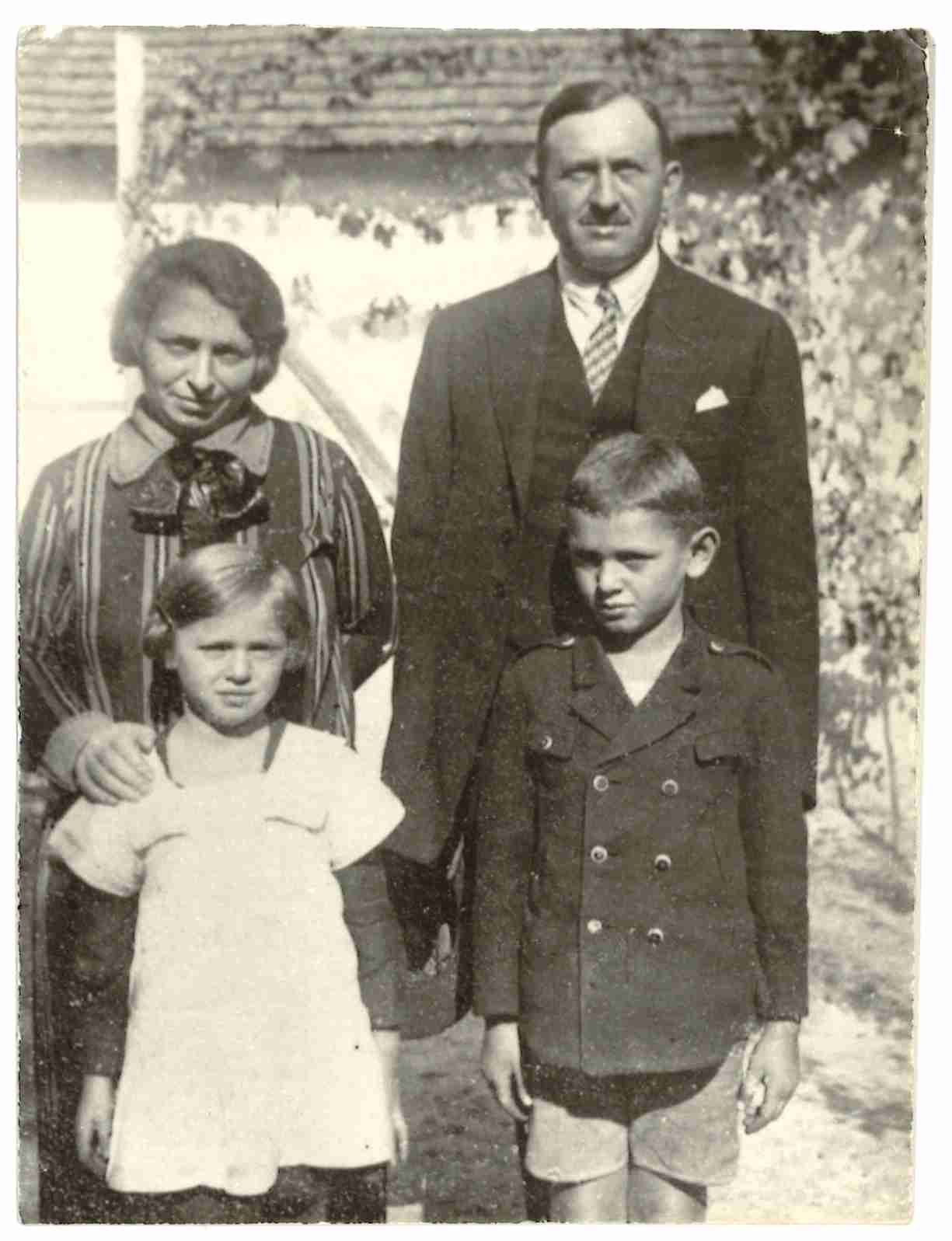
Georg (György) was the son of Janka and Ferenc Stern. His father worked in Raab/Győr (Hungary) in livestock trade. Georg's siblings were Eva (1919-1981) and Stefan (1926-2004).
At the University for World Trade, Georg was enrolled between the winter semester 1935/36 and the winter semester 1937/38. He took his last exam on December 13, 1937. As a Jew, he was not allowed to continue his studies after the Wehrmacht's invasion of Austria. Until mid-February 1938, he resided at Pulverturmgasse 7/5 (9th district of Vienna). Against the backdrop of the 'Anschluss' of Austria to the 'Third Reich' and the impending persecution of Jews, he subsequently deregistered from his birthplace and hometown Raab.
In Hungary, the survival chances for the Jewish population drastically deteriorated when the German Wehrmacht invaded the country in March 1944. Under the supervision of a special command, which was under the command of SS-Obersturmbannführer Adolf Eichmann (head of the 'Jewish Bureau' in the Berlin Reich Security Main Office), Hungarian Jews were ghettoized with the involvement of the Hungarian authorities in parallel to their complete disempowerment and then deported to the extermination camp Auschwitz-Birkenau/Oświęcim.
In Raab, Georg Stern's family was also forced to move into the newly established ghetto. From there, the parents were presumably deported with the first transport on June 11, 1944. Ferenc (born 1884 or 1885 in Pápa [Veszprém County] as the son of Jakab Stern and Terezia, née Löwy) and his wife Janka (born 1892 in Raab as the daughter of Henrik Fleischmann and Roza, née Polak) were murdered in the gas chambers of Auschwitz-Birkenau. The date of death is unknown. According to oral tradition, Janka and Ferenc were killed in October 1944, while the Central Database of Names of Holocaust Victims states July 15, 1944 (ID 6946245).
The two younger children of Janka and Ferenc Stern survived the Holocaust and the Second World War, while Georg's fate remains partly unresolved.
Georg Stern had already become a victim of the anti-Semitic persecution policies of the local government, which was allied with Nazi Germany, before the Wehrmacht's invasion of Hungary. He was indeed conscripted into a Jewish forced labor battalion. Such units were commanded by non-Jewish Hungarian officers and guarded by Hungarian soldiers. Thousands of Jewish men were comprised in the forced labor battalions, who were generally denied the right to serve in the military for racist reasons, and regular service in the army was denied to them. Instead of weapons, the Jewish forced laborers were only equipped with work tools - and thus could not even defend themselves. From 1942 on, they also no longer wore uniforms but civilian clothes. In addition, they were required to wear armbands: Jews in yellow, Christians of Jewish descent in white. They were thereby visibly stigmatized. Under often life-threatening conditions, the Jewish forced laborers from Hungary were used during the war for the construction of roads, mines, railway lines, and defenses. The transportation of mines or the clearing of minefields were also among their tasks. It is estimated that after Hungary declared war on the Soviet Union, which the Hungarian government announced shortly after the German Wehrmacht's invasion of the country (June 27, 1941), between 37,000 and 50,000 members of the forced labor battalions were deployed at the Eastern Front. How fatal this deployment could be for those affected is evident from the anti-Semitically infused diary entry of a Hungarian ensign from July 1942: 'The minefield was cleared under the guidance of technical troops [...] by Jewish labor service companies. [...] on average every twentieth [mine] exploded and a few Jews remained there. [...] With this mine clearance we definitely achieved two goals: on the one hand, the Jews were decimated, on the other hand [sic] we saved the lives of the [non-Jewish] Hungarian pioneers. The Germans themselves often said enviously that they had not thought of that!' (quoted after Fritz [Ed.] 2021, p. 37) There are also reports of targeted massacres of Jewish forced laborers by Hungarian soldiers (cf. ebd., pp. 37 f.). By March 1944, approximately 42,000 members of such units died due to the catastrophic conditions of deployment and life or as a result of military events (Braham 2000, ch. 2, Lappin-Eppel 2010, pp. 16 f. and Snyder 2015, p. 256). Alone during the Soviet winter offensive of 1943, over 21,000 members of the forced labor units fell at the Eastern Front, were injured or fell into Soviet captivity (Fritz [Ed.] 2021, p. 38).
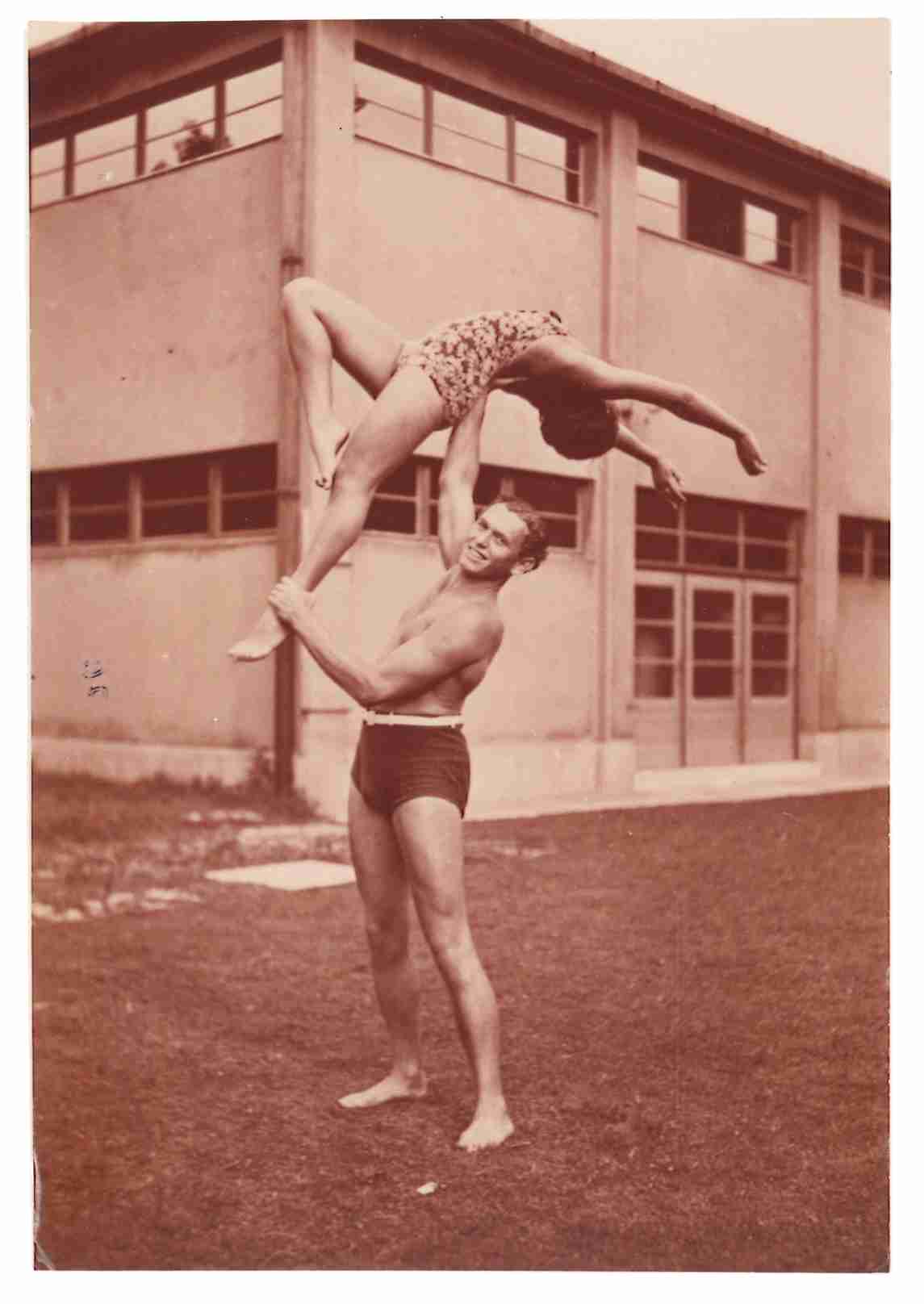
Georg Stern belonged to the forced labor unit II/6 (tábornyi munkásszázad), which was deployed during the war against the Soviet Union in Poltava, Ukraine. His trace is lost on January 20, 1943; since that day he has been considered missing. The exact circumstances and consequences are unknown. They may be connected with the advance of the Soviet army into Ukraine during the Battle of Kharkov (February/March 1943); however, Poltava itself was not captured by the Red Army until September 23, 1943. Did Georg Stern die in the fighting? Was he murdered by German or Hungarian soldiers, whose harassment left the unarmed Jewish forced laborers helpless? Did he voluntarily surrender to Soviet captivity to escape the often deadly outbreaks inflicted on Jewish forced laborers by the superiors of the Hungarian forced labor battalions or by German soldiers in the face of the advancing Red Army? Was he - like many other forced laborers - captured and/or killed by the Soviet regime on the grounds that he had worked for the enemy? Was he liquidated on site or taken to a Soviet camp? According to family tradition, Georg Stern survived the Holocaust and the Second World War. It is said that he was taken to the Soviet Union after Hungary was liberated from the authoritarian-fascist regime of Regent Miklós Horthy (1920-1944) and the collaborating Nazi Ferenc Szálasi (1944/45) despite his sympathies for communism. Since then, there has been no news of him, so it can be assumed that he was killed in Stalin's realm at the latest by this time.
His nine-years-younger brother Stefan, who had been expelled from high school in 1938 because of his Jewish descent, benefited from the fact that he did an apprenticeship as a watchmaker and precision mechanic in Raab between September 1940 and March 1944, with watchmaker master Wittmann, whose shop was located in Kosut Lajos Utca 8 near the impressive Raab Synagogue. As the Nazi authorities recruited all male ghetto residents who had learned a trade for labor service after the Wehrmacht's invasion of Hungary, Stefan was initially taken to a camp in Mosonmagyaróvár/Wieselburg-Ungarisch Altenburg. From there he was sent to the estate of Albertkázmérpuszta (on the current border between Austria and Hungary), where Stefan was employed in agriculture. However, together with a friend, he managed to escape in the second half of October 1944. This was facilitated by a Hungarian guard who had been an acquaintance of his father's. The escape occurred at a time when the Waffen-SS took over the guard of the camp at Halbthurn after Horthy was deposed and arrested due to his negative stance towards the deportation of Jews and a ceasefire with the Soviet Union following 'Operation Panzerfaust' led by Austrian SS-Standartenführer Otto Skorzeny. While the fascist Arrow Cross took power in Hungary with the support of the German occupying forces, Stefan made his way to Budapest. In the Hungarian capital, he sought asylum from Switzerland. In the so-called 'Glashaus', which Jewish glass manufacturer Arthur Weiss had built in the 1920s at Vadászbáz Utca 29, Stefan was under the care of Carl Lutz. This Swiss Vice-Consul saved over 60,000 Hungarian Jews from deportation and the Holocaust by issuing protective passports, circumventing the restrictive policies of his own government. Although the Arrow Cross repeatedly attacked the Glashaus and killed several Jews in front of the building, Stefan was safe from persecution between November 1944 and the entry of the Red Army into Budapest (January/February 1945).
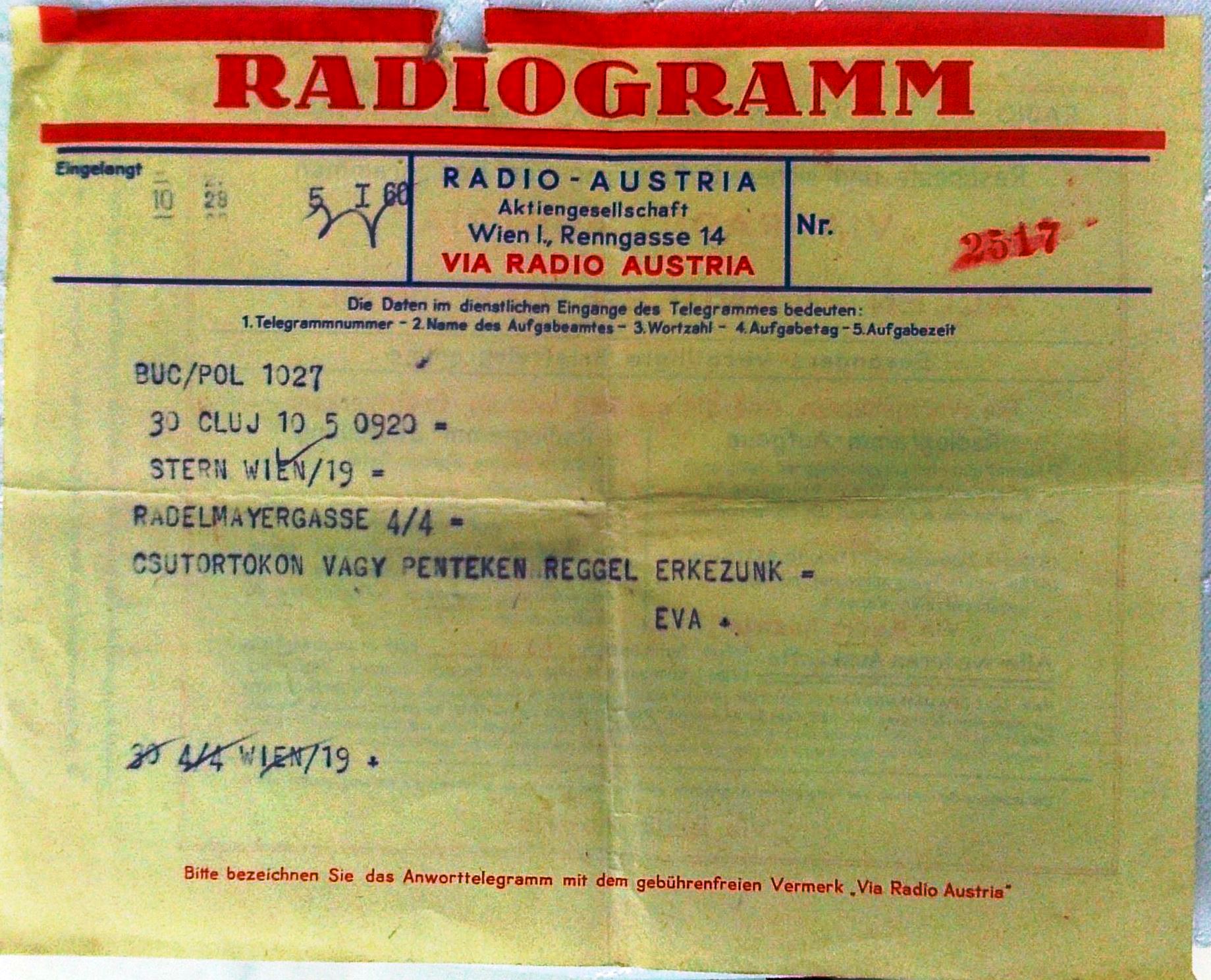
Finally, Eva was initially deported with her parents to Auschwitz by the National Socialists. She was among those inmates who were forced into the notorious death marches before the concentration camp was taken over by the Red Army (January 27, 1945). The destination of the murderous foot march was the Bergen-Belsen concentration camp, which was only liberated by British soldiers on April 15, 1945. After the liberation, Eva returned to Budapest. After her first husband, who bore the last name Szarz, passed away, she married Nicolas Fischer (1908-1986), whose mother tongue was Hungarian. After the war, they moved to Fischer's homeland, Romania. However, when Eva and her husband wanted to leave, a large sum of money had to be paid to the government in Bucharest; as in countless similar cases, the communist regime extorted valuable foreign currency in this way. According to her sister-in-law Rosemarie Stern (December 14, 1937 - January 17, 2024), Eva's brother Stefan provided the ransom. On January 5, 1960, Eva was able to inform Stefan by telegram that she would be allowed to leave Cluj Napoca for Austria two or three days later. In January 1963, Eva and Nicolas then emigrated to Canada via Italy. After her death in 1981, the urn with Eva's ashes was transferred from Toronto to Vienna and buried in the Hütteldorfer Cemetery. After her husband Nicolas Fischer passed away at the age of 78, his urn was also transferred to Vienna. The urn grave of the Fischer couple was abandoned when Eva's brother Stefan passed away on February 17, 2004; the two urns were now buried together with Stefan's coffin in grave 13 of the Hütteldorfer Cemetery.
Author: Johannes Koll
Downloads
Photos
Source material
Wirtschaftsuniversität Wien, Universitätsarchiv, Karteikarte und Diplomprüfungsliste.
Meldeauskunft des Wiener Stadt- und Landesarchivs, GZ MA 8 – B-MEW – 174381/2013.
Győr Jewish Website: Győr Holocaust Martyrs, http://gyorjewish.org/s1.htm [17. Dezember 2014].
Yad Vashem: The Central Database of Shoah Victims' Names, http://db.yadvashem.org/names/search.html?language=en [17. Dezember 2014].
United States Holocaust Memorial Museum: Holocaust Survivors and Victims Database, http://www.ushmm.org/online/hsv/person_view.php?PersonId=5859281 [17. April 2015].
Telefonat von PD Dr. Johannes Koll (Wirtschaftsuniversität Wien) vom 4. November 2014, Gespräche in Wien am 12. Dezember 2014 und 8. Mai 2015 mit Rosemarie Stern (Schwägerin von Georg Stern). E-Mail-Verkehr mit Rosemarie Stern zwischen November 2014 und November 2015.
Regina Fritz (Hrsg.): Ungarn 1944-1945 (= Die Verfolgung und Ermordung der europäischen Juden durch das nationalsozialistische Deutschland 1933-1945, Bd. 15), Berlin/Boston 2021.
Randolph L. Braham: The Politics of Genocide. The Holocaust in Hungary, gekürzte Ausgabe Washington 2000.
Eleonore Lappin-Eppel: Ungarisch-Jüdische Zwangsarbeiter und Zwangsarbeiterinnen in Österreich 1944/45. Arbeitseinsatz – Todesmärsche – Folgen (= Austria: Forschung und Wissenschaft: Geschichte, Bd. 3), Wien/Münster 2010.
Timothy Snyder: Black Earth. Der Holocaust und warum er sich wiederholen kann, München 2015.
E-Mail von Oleksandr Sidorenko (Poltava) an PD Dr. Johannes Koll (Wirtschaftsuniversität Wien) vom 29. Mai 2015.
E-Mail von Col. Dr. Attila Bonhardt (Hadtörténeti Intézet és Múzeum, Budapest) vom 5. November 2015, GZ LEV-1749-1/2015.
The Glass House Carl Lutz, http://www.uveghaz.org/?categoryId=36511 [10. Mai 2015].
Friedhöfe Wien, Verstorbenensuche, http://www.friedhoefewien.at/eportal/ [17. Dezember 2014].