

Karl (auch Hans Peter) Schlosser (ursprünglich: Karl Hans Petrus Eugen Stefan Maria de las Mercedes de Borbón y Habsburgo-Lorena, Freiherr von)
- Born on: 13.4.1916
- Birthplace: Vienna (Wien),
- Category: Diploma program
- Right of domicile: Wien (Wien),
The English version is based on a translation by artificial intelligence. The authentic version is the German text.
Family, School, and Studies
Karl Schlosser Jr. came from a family on his father's side that was elevated to the baronial status by Emperor Franz Joseph I in 1868, and on his mother's side from a family that plays a prominent role in automotive history. His father, Austrian civil servant Baron Karl von Schlosser Sr. (December 23, 1878 in Zbraslav/Königsaal to April 13, 1957 in Vienna), and his mother, Mercédès Adrienne Ramona Manuela Schlosser (September 16, 1889 in Vienna to February 23, 1929 in Vienna, maiden name Jellinek), after whose first name the world-famous automotive brand of the same name has been named since 1902, were united in marriage on February 20, 1909, by Jean-Charles Arnal du Curel, the Bishop of Monaco, in the seaside Old Town Church of St. Pierre in Nice, southern France, where the bride's father, the successful businessman Emil Jellinek (April 6, 1853 in Leipzig to January 21, 1918 in Geneva, since June 1903 Emil Jellinek-Mercédès) served as Austrian-Hungarian consul and, from November 1908, as consul general, and alongside a fashionable villa in Baden near Vienna and the Paris hotels Astoria and Mercédès, also owned a chic villa on the Promenade des Anglais 54. In 1904, Emil Jellinek was also consul of Mexico in Nice, and four years later honorary consul of the Austro-Hungarian double monarchy in the Principality of Monaco.
Karl Schlosser Jr. was baptized on May 3, 1916, in the Roman Catholic parish church ‘Zu den Heiligen Schutzengeln’ (also called Paulanerkirche), under the name Karl Borromäus Hans Petrus Eugen Stefan Maria de las Mercedes de Bourbon y Habsburgo-Lorena. In the same church, his sister (April 20, 1913 in Vienna to December 10, 1993 in Vienna) was baptized on April 29, 1913, under the name Elfriede Susanne Carmen Caroline Maria de las Mercedes. Both siblings were also confirmed in Vienna: Elfriede on June 4, 1925, and Karl on June 12, 1930. At this time, their parents had already been divorced for some time. Mercédès, who, according to her half-brother Guy, after a sheltered childhood in Baden, Vienna, and Nice had to try to secure the survival of her two children through “begging” at grocery stores after World War I (Jellinek-Mercédès 1962, p. 389), entered into a second marriage on January 5, 1923, just over two weeks after her divorce from Karl Schlosser Sr., with the sculptor Rudolf Leopold Baron von Weigel, which was already dissolved on June 4, 1925.
Karl Schlosser Jr. attended the Theresian Academy Realgymnasium (‘Theresianum’, Favoritenstraße 15, 4th District of Vienna) between 1926 and 1934. After he obtained his high school diploma there, he initially enrolled in the Law and Political Science Faculty of the University of Vienna for six semesters from the winter semester 1934/35 to the summer semester 1936 and again from the winter semester 1937/38 to the summer semester 1938. Alongside his studies, he completed an internship at the French trade attaché in Vienna (January 1, 1935 to July 15, 1936). After the first state examination (April 20, 1936), he performed his military service as a one-year volunteer in the Karlskaserne (Maurichgasse 18-22, 21st District of Vienna), where the 1st Flying Regiment of the Austrian Federal Army was stationed, from September 1, 1936 to August 31, 1937; he left military service as a cadet. However, Schlosser did not complete the second part of his law studies. As will be shown later, following the ‘Anschluss’ of Austria to the ‘Third Reich’ (March 1938), he was considered a ‘mixed breed of the first degree’ or ‘half-Jew,’ and thus his “prospects for employment in the public service were no longer present and [such] no longer desirable,” as he himself expressed after World War II (Salzburg State Archives, personal file Dkfm. Karl Schlosser).
Instead, Karl Schlosser enrolled in the winter semester 1938/39 at the University for World Trade. Here he was nominally enrolled until the fall trimester of 1939 for the six semesters that the diploma program normally lasted; during this time, three semesters of his law studies at the University of Vienna were credited to him. While he had lived before and immediately after military service in his father's apartment at Mayerhofgasse 1/18 (4th District), he registered in July 1938 at Taubstummengasse 8/7 (4th District), where he shared the apartment with his sister Elfriede. Looking back, it seems strange that Karl, who was considered a ‘half-Jew’ according to Nazi doctrine and would later actively participate in resistance against the Nazi regime (see below), wrote his free scientific work, which was part of the diploma examination, with Professor Ernst Beutel (1877–1944), a fervent Nazi. Before being awarded the title of diploma business economist, Schlosser had to submit, as was customary for all ‘mixed breeds’ based on a decree from the Ministry of Internal and Cultural Affairs, to the exclusion from all public offices in the territory of the German Reich. The diploma, issued or dispatched on March 15, 1940, and signed by the equally radical Nazi rector Kurt Knoll (1889–1959), explicitly stated that it did “not entitle him to hold any public office in the territory of the German Reich.” Furthermore, Schlosser – like many other ‘mixed breeds’ – had been only ‘conditionally’ admitted to his studies.
So, what was the discrimination that Karl Schlosser Jr. had to endure at the University for World Trade and the University of Vienna under the Nazi regime? Karl's ‘Jewish’ descent according to the Nuremberg Race Laws of 1935 was connected to his mother's family: His maternal grandfather Mercédès, Dr. Adolf (also Aron) Jellinek (June 26, 1821 in Derslawitz/Drslavice to December 28, 1893 in Vienna) was at that time Chief Rabbi in Vienna and regarded as “one of the most prominent representatives of Viennese Jews between 1860 and 1890” (Gaugusch 2011, p. 1266). Until her 14th birthday, Karl's mother Mercédès, one of the seven grandchildren of Adolf and his wife Rosalie (November 16, 1932 in Pest to August 2, 1892 in Weikersdorf near Baden, maiden name Bettelheim), belonged to the Jewish faith community, although she withdrew from the Israelite Church Community on October 7, 1903. While her father Emil got baptized as a Catholic in 1905 after several years of being non-religious, Mercédès converted to the Protestant faith according to the Augsburg Confession in Nice in 1908. She was the only family member to convert from Judaism to Protestantism (Kempter 1998, p. 362). However the descendants of the former Vienna Chief Rabbi viewed their exit from Judaism, for the Nazis, the individual confession of faith was irrelevant. Therefore, Karl was considered a ‘mixed breed’ and – as explained above – was treated with the typical Nazi discrimination against ‘Aryan’ individuals.
Persecution of Family Members by the Nazis
Immediately affected by the consequences of the ‘Anschluss’ of Austria to the German Reich (March 1938) were also his father and sister.
As his son would later do, Karl Schlosser Sr. obtained his high school diploma at the Theresianum, where for a time Baron Alphonse Mayer von Rothschild (February 15, 1878 in Vienna to September 1, 1942 in American exile) was among his classmates. After studying law and political sciences at the University of Vienna, where he likely met Rothschild again, he had worked since August 1901 as a civil servant in Vienna, Laibach/Ljubljana, Gurkfeld/Krško, and Krainburg/Kranj under the Empire (until 1918), the First Republic (1918–1933/34), and under the Austrofascist regime (1933/34–1938) in various state and federal ministries; these included the Ministries of Public Works and of Trade and Transport. For his services in public service, Karl Schlosser Sr. was awarded the Grand Silver Medal of Honor for Services to the Republic of Austria on February 7, 1934. He was also a recipient of the Bronze Jubilee Memorial Medal for the Armed Forces, which was awarded in 1898 on the occasion of the 50th anniversary of Emperor Franz Joseph's ascension to the throne, and of the Jubilee Cross for civil servants, which was awarded ten years later on the occasion of the 60th anniversary of the last emperor of the Austro-Hungarian monarchy's ascension to the throne. Moreover, he was an officer of the Bulgarian Order for Civil Merits, and in 1936 he was awarded the Commander’s Cross II of the Vasa Order by King Gustaf V of Sweden. Finally, Karl Schlosser Sr. during World War I, whose end the young father experienced at the rank of lieutenant, was awarded the Honorary Decoration II Class from the Red Cross. The ‘Anschluss’ ended the career of Ministerialrat Karl Schlosser Sr., who had most recently led the department for trade promotion in the Ministry of Commerce. Although he took an oath of office to Adolf Hitler on March 16, 1938, in accordance with the new legal requirements, the loyal civil servant, who had previously belonged to the Fatherland Front, the ruling party of the Austrofascist state, and supported the paramilitary Heimatschutz, was permanently retired on July 31, 1938. Karl Schlosser Sr. thus became a victim of political persecution by the Nazi regime. Although he was rehabilitated after World War II, he (likely due to age) never returned to public service.
Elfriede Schlosser obtained her high school diploma in July 1931 at the Wiedner Mädchenrealgymnasium (Wiedner Hauptstraße 39, 4th District), which was run by a Christian organization for the promotion of women's education and was only a few meters from the family apartment in Mayerhofgasse. Her knowledge of French, which already formed a professional focus at the Realgymnasium, was further deepened by passing a university examination in French (June 1932). She then attended the final year course at the Commercial Academy Vienna I (Akademiestraße 12, 1st District) in the school year 1932/33. She subsequently worked as a stenotypist at the Alpine Creditors’ Association (Singerstraße 14, 1st District) before entering the Chancellery service of the Federal Chancellery on July 1, 1934. Here she initially worked in the presidency office but switched to the Austrian legation in Prague on November 1, 1935. At the end of October 1936, she was made available to the Presidency Office of the Federal Chancellery. In June 1938, Elfriede took a leave of absence and accepted a position at the American Consulate General in Vienna. As she herself wrote to Ministerial Director Dr. Kurt von Burgsdorff on December 5, 1938, she could not prove the ‘Aryan descent on her mother’s side’ required by the Nazi regime (Austrian State Archive, Republic Archive, Federal Chancellery-I, Presidency, PA 383, Schlosser Elfriede). The Reich Governor's Office, which had taken over the agendas of the Federal Chancellery after the ‘Anschluss’ of Austria, regarded her leave request as a voluntary resignation and took the opportunity to rid itself of a ‘first-degree mixed breed’ without formal dismissal or even discharge at the end of October 31, 1938.
From the immediate family of Karl Schlosser Jr. and his sister Elfriede, the ‘Anschluss’ with its comprehensive Nazification of the country and the systematic persecution of the Jewish population claimed several lives.
- The second oldest brother of their mother, Raoul Ferdinand Raimund Maria Jellinek-Mercédès (born June 18, 1883 in Algiers) shot himself in the Villa Mercedes in Baden, where he lived with his wife Leopoldine (November 8, 1885 to April 18, 1981, maiden name Weiss). Preceding the suicide was the fact that Raoul could not pay the ‘Jewish property levy’ imposed by the Nazi regime after the ‘Reichspogromnacht’ (November 9/10, 1938) on all Jews. After the financial administration seized all the furniture from his apartment, he took his life on February 11, 1939; four days later, Karl Schlosser Jr.'s uncle was buried in the Vienna Central Cemetery. His hope of saving the sin levy through the suicide of his non-Jewish wife was not fulfilled, as Leopoldine had to pay the Nazi plundering state almost 6,000 Reichsmarks in inheritance taxes and 12,000 Reichsmarks for the ‘Jewish property levy’. Thus, a large part of their possessions, which also included a valuable library, was lost.
- A cousin of Mercedes died as a result of imprisonment and torture by the Secret State Police (Gestapo): Otto Jellinek (born March 21, 1896) was arrested in the spring of 1943 and held captive for weeks. He was so severely abused that he died of meningitis in early July 1943.
- One of Otto Jellinek’s sisters, Clara Dorothea Busch (born January 5, 1888, died 1992), was deported to the ghetto and concentration camp Theresienstadt/Terezín on January 10, 1944. She was able to experience liberation in early May 1945.
Other relatives from the maternal line either emigrated or tried to counteract impending terror measures by the Nazi regime by protesting against their classification as ‘Jews’ or ‘mixed breeds’ before the authorities. The children of Charlotte Zels (May 12, 1885 in Leipzig to 1943, maiden name Jellinek), Otto and Marianne Zels, had to live underground in Nice starting in 1943 to escape deportation to a Nazi extermination camp.
Resistance against the Nazi Regime and Its Consequences
Whether the persecution of family members or social connections to like-minded Catholics motivated Karl Schlosser Jr. to actively engage in resistance against the Nazi system cannot be definitively decided here. In any case, he is one of the few graduates of the University for World Trade who made this brave and life-threatening decision. Along with Gerhard Fischer-Ledenice (born March 5, 1919 in Vienna, son of Colonel Moritz Fischer von Ledenice and Maximiliane, born Freiin Heine von Geldern, executed on July 5, 1944 at the Vienna Regional Court), who also attended Theresianum and, like Karl Schlosser, was enrolled at the ‚Welthandel‘ until 1940, he joined a resistance group that initially called itself the ‘Deutsche Freiheitsbewegung,’ from the autumn of 1939 ‘Österreichische Freiheitsbewegung,’ and from June 1940 ‘Freiheitsbewegung Österreichs’ (Schafranek 2020, pp. 203-219). This Catholic resistance group formed around the Klosterneuburg Augustinian Canon Karl Roman Scholz (born January 16, 1912 in Mährisch-Schönberg/Šumperk, executed on May 10, 1944 at the Vienna Regional Court) and the historian and journalist Viktor Reimann (January 25, 1915 in Vienna to October 7, 1996 in Vienna). Its aim was to overthrow the Nazi regime and restore Austrian independence. In 1940, the group numbered nearly 100 people. It consisted mainly of students who “had all been bound by an oath before a cross.” (Neugebauer 2015, p. 170)
Before the ‘Österreichische Freiheitsbewegung’ could unite with two similarly oriented resistance groups, the ‘Großösterreichische Freiheitsbewegung’ led by lawyer Dr. Jakob Kastelic (January 4, 1897 in Vienna, executed in Vienna on August 2, 1944) and the ‘Österreichische Kampfbund’ led by Dr. Karl Lederer (born September 22, 1909 in Vienna, executed on May 10, 1944), a tax official dismissed by the Nazis in 1939, they were betrayed to the Gestapo by informants who had either volunteered to serve the secret state police or had been specifically infiltrated into the three ‘freedom movements’ by them. Particularly notable were the Burgtheater actor Otto Hartmann (January 22, 1904 in Vienna to March 14, 1994 in Vienna) and Kurt Koppel (April 18, 1915 in Vienna to after 1945), who, along with his lover Margarete Kahane (born June 10, 1917 in Vienna, died circa 1950 in Yugoslavia), were responsible for the arrest of well over 800 individuals from both the communist and conservative resistance (Schafranek 2000, pp. 407-427). For months, the informers from the relevant department at the Gestapo headquarters in Vienna (Morzinplatz 4, 1st District) provided information about the members and leadership cadres, organizational structures, interconnections, and ideological orientation of the three ‘freedom movements’ and created criminal offenses as agents provocateurs on their own initiative or at the Gestapo’s direction, providing the planned Gestapo crackdown in summer 1940 with artificially added legitimacy. In reality, between July 1940 and the winter of 1940/41, the Gestapo arrested well over 200 members of the three resistance groups, who at that time represented the core of the Catholic-conservative and partly legitimist parts of the Austrian resistance. In total, well over 450 activists had to face judicial proceedings (Neugebauer 2015, pp. 168-175; Boeckl-Klamper/Mang/Neugebauer 2022, p. 141).
Karl Schlosser Jr. was arrested on November 20, 1940, due to his membership in and work for the ‘Österreichische Freiheitsbewegung’; at that time, he was serving as a private in the German Wehrmacht, to which he had been drafted on February 8, during his diploma examinations at the ‘Welthandel.’ He remained in pre-trial detention until August 30, 1943. On December 2, 1943, he was sentenced by the second senate of the People’s Court in Potsdam under Nazi judge Dr. Alfred Köhler (October 1, 1883 in Gimmeldingen to September 19, 1945 in Gimmeldingen) to four years in a labor camp and four years of loss of honor; his police and pre-trial detention were counted toward this. While Karl Schlosser belonged to those members of the ‘Österreichische Freiheitsbewegung’ who experienced the end of the war, his former ‘Welthandel’ classmate Fischer-Ledenice, Karl Roman Scholz, and eleven other members of the three named freedom movements were sentenced to death and executed after years of imprisonment. Others, however, died due to the conditions of detention and torture in prisons.
Regardless of his trial, Karl Schlosser was able to work as an operations assistant at the United Parquet and Wood Works Schweiger & Co. (Am Kaiserühlendamm 93, 21st District) between September or October 1943, after his release from pre-trial detention, and September or October 1944, before he had to leave the company at the insistence of the shop foreman and the relevant district administration of the German Labor Front, although according to his job reference he had completed all tasks “correctly and to the utmost satisfaction” (Salzburg State Archives, personal file Dkfm. Karl Schlosser).
On November 1, 1944, Karl Schlosser had to begin serving the sentence imposed by the People’s Court. He served it in the Straubing prison, which according to another prisoner was “one of the safest and strictest prisons in Bavaria” (Ludwig Krausz-Wienner in: Documentation Archive of the Austrian Resistance [DÖW] [Ed.] 1992, Vol. 2, p. 289). As Karl Schlosser informed his father from prison, he was not allowed any correspondence or visits.
As the air raids by the American army on Bavaria including Straubing increased, the situation in the prison also became dramatic. As Walter Crammer, another prisoner and like Schlosser a former member of the ‘Österreichische Freiheitsbewegung’ reported, the inmates could see “from the prison cell the black bomb walls that had been rolling towards us up to the prison wall. Even the prison wall was partially bombed away. But the prison itself was untouched except for the windows, except for the water pipes for the toilets and the kitchen.” (Walter Norbert Othmar Crammer in DÖW [Ed.] 1992, Vol. 2, p. 311). After Reichsführer-SS Heinrich Himmler issued the order on April 18, 1945 that “no prisoners may fall alive into the hands of the enemy” (cited in Wachsmann 2016, p. 667), the inmates of the Straubing prison were sent on foot to one of the notorious death marches to the nearly 30 kilometers distant Dachau on April 25. Local historian Karl-Heinz Zenker (2015) reports: “The convoy began on the orders of the SS on April 25, 1945, at 7:30 AM with 3,000 prisoners under the supervision of approximately 100 prison guards with rifles. The unchained prisoners were dressed in prison clothing and wrapped in blankets, carrying mess kits and a bit of bread and mostly wearing wooden shoes. The convoy was accompanied by the institution director Ottmar Badum and Police Inspector Dott. […] On the first day, about 400 prisoners managed to escape, as the guards shot in the air during attempts to flee, as confirmed by eyewitnesses.” One of the unwilling participants of the death march, Richard Fiedler (born September 17, 1903), from Vienna, reported that during the multi-day march from Straubing to Dachau, the prisoners faced life-threatening situations both from allied dive-bombers and from the SS guards who shot some of the starved and weakened prisoners. When on April 29, the news of the arrival of American and French troops in Dachau was heard, there was a brief risk that all prisoners would be shot at Freising. Other guards wanted to return to Straubing despite the hardships, even though the city had already been liberated by American soldiers. Others insisted that the prisoners be escorted according to the existing orders to Dachau.
As he himself stated in 1950, Karl Schlosser was one of those participants in the death march from Straubing to Dachau who were liberated by American soldiers on April 29 – the same day the Americans liberated about 32,000 prisoners from the concentration camp (Wachsmann 2016, p. 668). They were also the ones who took Schlosser to Salzburg at the end of May, where he found his new place of residence.
Post-War Period
Initially, he stayed – according to his own words “after a short recovery stay in the countryside” (Salzburg State Archives, personal file Dkfm. Karl Schlosser) – in the village of Niederalm (Salzburg state) before moving to Salzburg city on September 19, 1945. Here he lived until April 1951 at Imbergstraße 33, then until his death at Judengasse 3.
Due to his years of imprisonment, Karl was recognized by the Second Republic as one of the “victims of the struggle for a free, democratic Austria,” to whom special care measures and benefits were granted in 1947 through a federal law. The relevant authorities issued him a corresponding certificate, which obliged all public offices and institutions to “promote his applications as much as possible and to treat them favorably and expeditiously.”
In Salzburg, Karl Schlosser initially found a position for a few months at the Information Services Branch of the headquarters of the American forces, where he edited its News Service. On June 17, 1946, he entered public service. In contrast to his father, however, he did not work in federal service, but in the service of the state of Salzburg. Starting in their clearing department, he was employed in the departments VIII (property management) and IX (transport and foreign trade) as well as in the state office directorate; between 1948 and 1951 he was seconded to the Salzburg branch of the Austrian Trade Office. Until his death in 1977, he reached the rank of Wirklicher Hofrat.
Still during his work for the Austrian Trade Office, Karl Schlosser married on April 21, 1951, at the church of the Salzburg Abbey St. Peter to Maria Antoinette (also: Marie-Antoinette) Pfanzelter(born December 15, 1919, daughter of Franz Karl and Maria Johanna Pfanzelter, died October 12, 2006), whose family owned a leading establishment in Salzburg. Exactly a week earlier, the couple, which had met after the war, had also given their yes vow at the civil registry office in Salzburg. Just a few months before Karl’s wedding, his sister Elfriede had entered into marriage: she had married Dr. Silvio Rudolf Gregor Andreas Nikolaus Gauss-Ghetaldi (November 22, 1901 to June 17, 1965) in Vienna-Margarethen in early February 1951, who had worked as a civil servant for the Lower Austrian state government in the 1930s, but like his later father-in-law was dismisssed from public service for political and ideological reasons after the ‘Anschluss.’ As the Gauleitung of the NSDAP for Lower Danube noted, Gauss-Ghetaldi was retired in February 1939 due to his “monarchist-clerical attitude” on the basis of the Regulation for the Reorganization of the Austrian Civil Service at just 37 years old. Only the acute shortage of personnel, which became apparent in public administration due to the increasing military defeats of the German Wehrmacht during WWII, allowed him to work as a “war auxiliary employee” from November 23, 1943, in that department of the Reich Governor’s Office of Lower Danube, which was responsible for matters of citizenship and Reich citizenship (Lower Austria State Archives, Office of the Lower Austrian State Government, State Office I/P, NS questionnaire Dr. Silvio Gauss-Ghetaldi). As an victim of Nazi persecution and unencumbered, Gauss-Ghetaldi was able to resume his regular civil service work after the war. At the time of the marriage, he was residing in Vienna as a Senior Councilor of the State Government. Until his death, Silvio lived with Elfriede at Schubertring 7/16 (1st District).
Karl Schlosser Jr. was also active in the Salzburg social life alongside his professional activities in public service. Thus, he was among the proponents of a society that soon after the end of the war aimed to establish a branch of the Austrian-American Society (ÖAG) in Salzburg. After overcoming initial concerns and resistance from the American occupation authorities, the ÖAG was able to start its activities, the goal of which was well expressed in the original designation: Society for the promotion of cultural and economic relations between Austria and the United States of America. In addition, Schlosser served as President of the Lions Club Hohensalzburg in 1972/73, to which he had joined well three years earlier. During his presidency, the club raised nearly 200,000 schillings for charitable purposes (≙ approximately 72,600 euros as of October 2025).
Karl Schlosser Jr. died childless on March 29, 1977, in Salzburg after a brief, serious illness. He was buried on April 4, 1977, at the Salzburg Municipal Cemetery (Gneiser Straße 8). At the burial, he was praised by Salzburg's provincial governor Dr. Hans Lechner as “an excellent specialist, a diligent and just civil servant, and a straightforward and likeable person.” Nearly three decades after Karl’s death, more precisely on October 19, 2006, his widow was buried in the same grave. His sister Elfriede, meanwhile, was buried on December 20, 1993, at the Vienna Cemetery Baumgarten (Waidhausenstraße 52, 14th District) in the family grave of Gauss-Ghetaldi, where her husband Silvio (since June 23, 1965), her brother-in-law Franz (since August 4, 1926), her father-in-law Franz (since August 11, 1948, former colonel in the Austrian army), and her mother-in-law Maria (since December 12, 1950) had been buried.
Karl Schlosser Jr.'s father had been buried on April 18, 1957, in the Vienna Central Cemetery. In the same grave rest his father, who was also named Karl Freiherr von Schlosser (born October 15, 1837 in Prague, buried May 16, 1915). Karl Schlosser Jr.'s mother was also buried in the Vienna Central Cemetery, but together with some of her (half-)siblings in the family grave Jellinek-Mercédès.
A public recognition of his engagement in the resistance did not evidently find Karl Schlosser Jr. either in Vienna or Salzburg after 1945. Like countless others who had been persecuted by the Nazi regime, Schlosser’s lifetime fell into that phase of Austrian post-war history in which Nazism represented “the great taboo” (Hanisch 2016, p. 226). That Salzburg was regarded for a long time as “the symbolic tomb of the forgotten” (Kerschbaumer 2016, p. 23) stands in the way of honoring Schlosser's engagement to this day.
Author: Johannes Koll
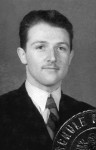
Thanks for the photographs from the childhood and youth of Karl Schlosser Jr. and his family go to Mercedes-Benz Classic, for his diploma certificate and portrait photo from his registration book at the University for World Trade to the Salzburg State Archives.
Source material
Gothaisches Genealogisches Taschenbuch der Freiherrlichen Häuser, 26. Jg., Gotha 1876, S. 693 f.
Roman Sandgruber: Traumzeit für Millionäre. Die 929 reichsten Wienerinnen und Wiener im Jahr 1910, Wien/Graz/Klagenfurt 2013, S. 182 f. und 368 zu Emil Jellinek(-Mercédès) und seiner Familie.
Guy Jellinek-Mercédès: Mein Vater der Herr Mercedes, Wien/Berlin/Stuttgart 1962.
Geburts- und Tauf-Buch der Pfarre Zu den Heiligen Schutzengeln 1916, Bl. 35, Nr. 21 zu Karl und 1913, Bl. 7 zu Elfriede, hier nach Matricula Online: Wien/Niederösterreich (Osten): Rk. Erzdiözese Wien: 04., Wieden (Paulanerkirche), https://data.matricula-online.eu/de/ [18. Dezember 2025].
Georg Gaugusch: Wer einmal war. Das jüdische Großbürgertum Wiens 1800-1938, Bd. 1 (= Jahrbuch der Heraldisch-Genealogischen Gesellschaft „Adler“ – Wien, 3. Folge, Bd. 16), Wien 2011, S. 1266-1272.
E-Mail von Dr. Ulrike Denk (Archiv der Universität Wien) an PD Dr. Johannes Koll (WU Wien) vom 18. Juni 2025, GZ 61/0804/25, Karl Schlosser (1916–1977).
Landesarchiv Salzburg, Personalakt Dfkm. Karl Schlosser, Nr. 1714621.
Wirtschaftsuniversität Wien, Universitätsarchiv, Studierendenkarteikarte und Diplomprüfungsliste Karl Schlosser.
Meldeauskunft des Wiener Stadt- und Landesarchivs zu Karl Hans Petrus Schlosser, GZ MA8 – B-MER-495096-2025.
Genteam.at: Index der jüdischen Matriken Wien und NÖ, Nr. 208802 und Genteam.at: Austritte aus der IKG 1868-1914, Nr. 7150 zu Mercedes Jellinek, http://www.genteam.at [23. September 2025].
Jahres-Bericht des Gymnasiums der k.k. Theresianischen Akademie in Wien 1893, 2. Teil, Wien 1893, S. 66 zu Karl Freiherr von Schlosser sen. und Baron von Rothschild am Theresianum.
Österreichisches Staatsarchiv, Archiv der Republik, Bundesministerium für Handel und Verkehr, Präsidium, Standesausweis Karl Schlosser sen.
Österreichisches Staatsarchiv, Archiv der Republik, Bundesministerium für Handel und Verkehr, Präsidium, Auszeichnungsanträge, Schlosser Karl [sen.], Zl. 13232/1936 und Zl. 11196/1937.
Marcell Klang (Hrsg.): Die geistige Elite Österreichs. Ein Handbuch der Führenden in Kultur und Wirtschaft, Wien 1936, S. 799 zu Karl Schlosser sen.
Österreichischer Amts-Kalender für das Jahr 1938, 17. Jg., Wien 1938, S. 80 zu Karl Schlosser sen.
Gertrude Enderle-Burcel (Hrsg.): Heinrich Wildner. Tagebücher 1938-1944. „Heute geht es gegen die Juden, morgen kann es gegen die anderen gehen …“, bearb. von Gertrude Enderle-Burcel/Roland Starch, Wien/Köln 2022, S. 846 zu Karl Schlosser sen.
Österreichisches Staatsarchiv, Archiv der Republik, Bundeskanzleramt-I, Präsidium, PA 383, Schlosser Elfriede.
Klaus Kempter: Die Jellineks 1820-1955. Eine familienbiographische Studie zum deutschjüdischen Bildungsbürgertum (= Schriften des Bundesarchivs, Bd. 52), Düsseldorf 1998.
Friedhöfe Wien: Verstorbenensuche, Eintrag zu Raoul Ferdinand Jellinek-Mercedes [5. November 2025].
Hans Schafranek: Widerstand und Verrat. Gestapospitzel im antifaschistischen Untergrund 1938-1945, 2. Aufl. Wien 2020.
Wolfgang Neugebauer: Der österreichische Widerstand 1938–1945, 2. Aufl. Wien 2015.
Boeckl-Klamper, Elisabeth/Thomas Mang/Wolfgang Neugebauer: The Vienna Gestapo, 1938-1945. Crimes, Perpetrators, Victims (= Austrian and Habsburg Studies, Bd. 33), New York 2022.
Dokumentationsarchiv des österreichischen Widerstandes, Akt 19793/147.
Josef Windisch: Österreichische Freiheitsbewegung Kastelic–Lederer-Scholz, in: Der Freiheitskämpfer. Organ der Kämpfer für Österreichs Freiheit 36 (1984), Nr. 2 vom Juni 1984, S. 5-8.
Arolson Archives, Auszüge aus Gefangenenbüchern des Zuchthauses und der Sicherungsanstalt Straubing, Einlieferungsdaten: 4.4.44 - 13.1.45, Sign. 4136007, DocID: 11784108 und 11784109.
Dokumentationsarchiv des österreichischen Widerstandes (Hrsg.): Erzählte Geschichte. Berichte von Männern und Frauen in Widerstand wie Verfolgung, Bd. 2: Katholiken, Konservative, Legitimisten, Wien 1992.
Karl-Heinz Zenker: Todesmärsche durch den Landkreis Freising im April 1945, in: FINK. Das Magazin aus Freising 9 (2015), H. 4, S. 22-25.
Richard Fiedler: Todesmarsch, in: Dokumentationsarchiv des österreichischen Widerstandes (Hrsg.): Erinnern – Biographien – Erzählte Geschichte – Haft 1938–1945, http://www.doew.at/erinnern/biographien/erzaehlte-geschichte/haft-1938-1945/richard-fiedler-todesmarsch [26. November 2025].
Nikolaus Wachsmann: Hitler’s Prisons. Legal Terror in Nazi Germany, New Haven/London 2004, S. 333 zum Todesmarsch von Straubing nach Dachau.
Wachsmann, Nikolaus: KL. Die Geschichte der nationalsozialistischen Konzentrationslager, München 2016.
Stadtarchiv Salzburg: Meldekartei Karl Hans Peter Schlosser.
Salzburger Nachrichten. Unabhängige Demokratische Nachrichten, 7. Jg., Nr. 88 vom 16.04.1951, S. 5.
Robert Hoffmann: Die Firma F. Pfanzelter in der Judengasse. Erinnerungen von Marie-Antoinette Schlosser, in: Bastei. Zeitschrift des Stadtvereines Salzburg für die Erhaltung und Pflege von Bauten, Kultur und Gesellschaft 56 (2007), 1. Folge vom März 2007, S. 15-19.
Adressenbuch von Krems und Stein an der Donau, hrsg. von Karl Schistal, 1. Ausg. 1931, Krems a.d.D. 1931.
Niederösterreichisches Landesarchiv, Amt der Niederösterreichischen Landesregierung, Landesamt I/P, NS-Fragebogen Dr. Silvio Gauss-Gethaldi; mit Dank an Dr. Stefan Eminger (Niederösterreichisches Landesarchiv).
Meldeauskunft des Wiener Stadt- und Landesarchivs zu Silvio Gauss-Ghetaldi, GZ MA8 – B-MEW-1457138-2025.
Doris Esser: Vom Lebensmittelpaket zum Space Mobil. Österreichisch-Amerikanische Gesellschaft ist zehn Jahre älter als Staatsvertrag – Neue Kontakte, in: Salzburger Nachrichten. Freie Tageszeitung für die österreichischen Bundesländer, 36. Jg., Nr. 99 vom 26. April 1980, S. 26.
E-Mail Ing. Thomas Markl (Lionsclub Hohensalzburg) vom 3. November 2025 an PD Dr. Johannes Koll (Wirtschaftsuniversität Wien).
Salzburger Nachrichten. Freie Tageszeitung für die österreichischen Bundesländer, 29. Jg., Nr. 142 vom 22. Juni 1973, S. 6.
Salzburger Nachrichten. Freie Tageszeitung für die österreichischen Bundesländer, 33. Jg., Nr. 76 vom 1. April 1977, S. 32.
Salzburger Nachrichten. Freie Tageszeitung für die österreichischen Bundesländer, 33. Jg., Nr. 81 vom 7. April 1977, S. 6.
Stadt Salzburg: Gräbersuche, http://www.stadt-salzburg.at/MagSbg.Web.App.SucheVerstorbene/SucheVerstorbene.aspx [5. April 2025].
Friedhöfe Wien: Verstorbenensuche, Einträge zu Elfriede, Franz jun., Franz sen. und Maria Gauss-Ghetaldi, http://www.friedhoefewien.at/verstorbenensuche [13. Oktober 2025]. Zu den genannten Personen siehe auch die Einträge auf http://www.geni.com/.
Friedhöfe Wien, Verstorbenensuche zu Karl Schlosser sen., http://www.friedhoefewien.at/verstorbenensuche [8. Oktober 2025].
Ernst Hanisch: Der politische Diskurs über den Nationalsozialismus in den langen 1950er Jahren, in: Alexander Pinwinkler/Thomas Weidenholzer (Hrsg.): Schweigen und erinnern. Das Problem Nationalsozialismus nach 1945 (= Die Stadt Salzburg im Nationalsozialismus, Bd. 7; Schriftenreihe des Archivs der Stadt Salzburg, Bd. 45), Salzburg 2016, S. 220-245.
Gert Kerschbaumer: Gespaltenes Gedenken im öffentlichen Raum – verschwiegene Opfer des NS-Terrors, in: Alexander Pinwinkler/Thomas Weidenholzer (Hrsg.): Schweigen und erinnern. Das Problem Nationalsozialismus nach 1945 (= Die Stadt Salzburg im Nationalsozialismus, Bd. 7; Schriftenreihe des Archivs der Stadt Salzburg, Bd. 45), Salzburg 2016, S. 22-64.