

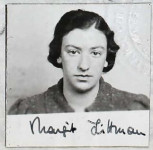
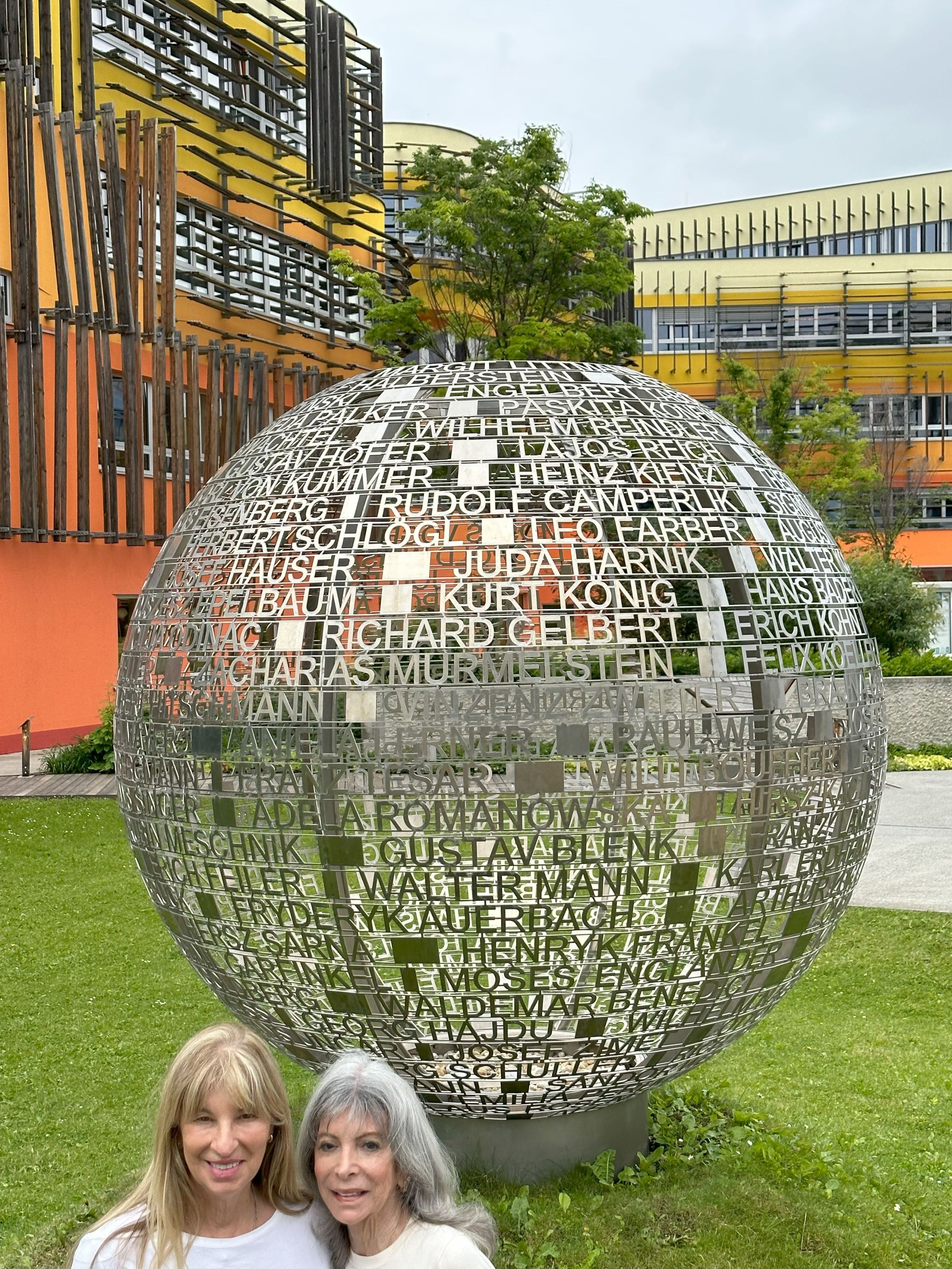
Margit Littmann
- Born on: 3.2.1919
- Birthplace: Gußwerk
- Category: Diploma program
- Right of domicile: Wien (Wien),
The English version is based on a translation by Artificial Intelligence. The authentic version is the German one.
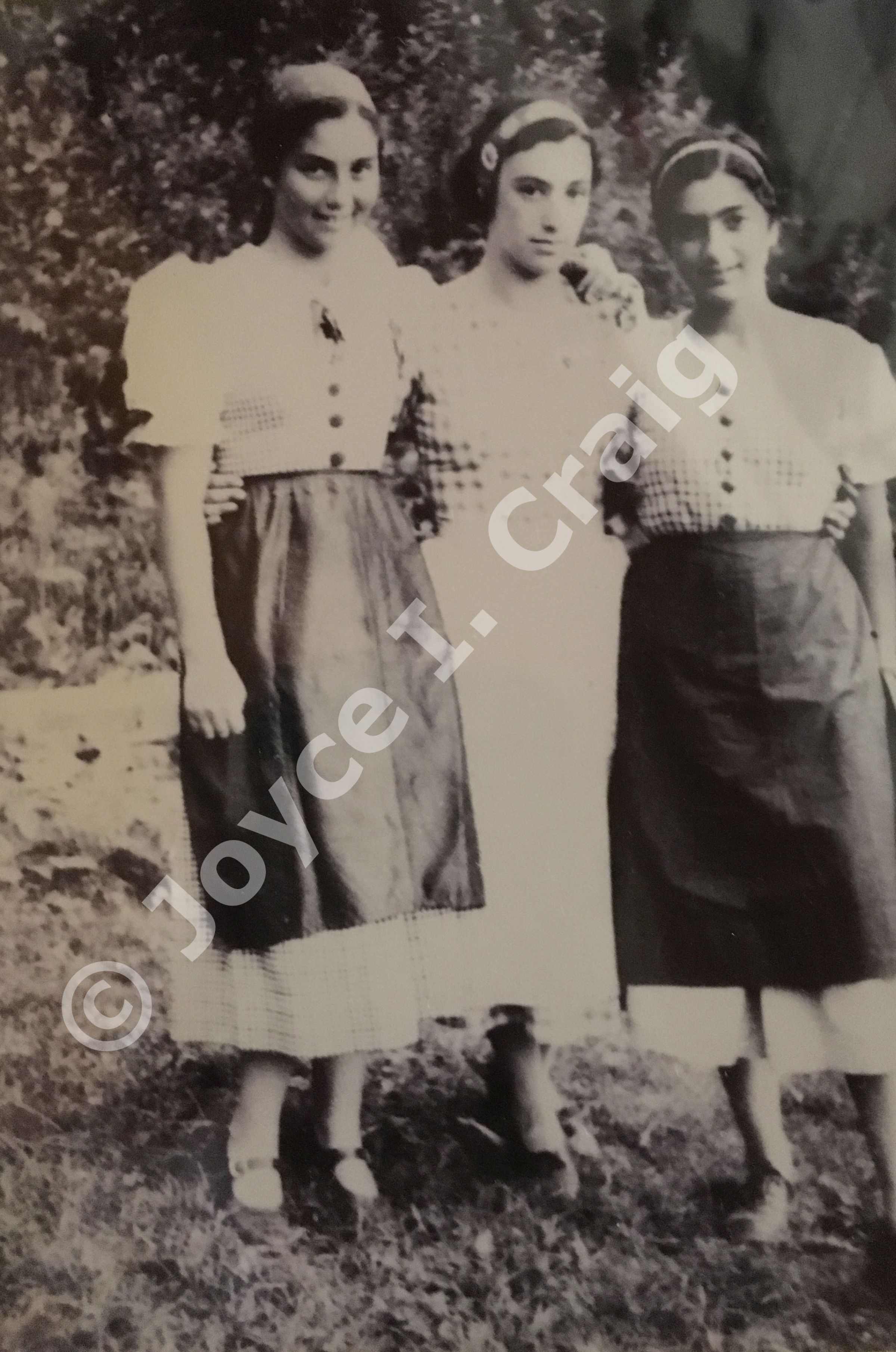
Margit Littmann was the daughter of the timber industrialist Oskar Littmann (born January 26, 1879, in the Hungarian town of Malyasfaln) and Adele (born March 30, 1889, maiden name Anschel). She had two older brothers: Herbert (born June 26, 1912) and Georg Wilhelm (born April 16, 1916); the latter passed away in 1921 from an illness.
Before starting her studies, Margit Littmann passed the high school diploma in 1937 at the first Austrian school where girls could graduate, the Eugenie Schwarzwald Women's Secondary School in the first municipal district of Vienna. Margit graduated as the top of her class "with distinction".
In the winter semester of 1937/38, she enrolled at the University for World Trade. Her first semester was also her last: Due to her Jewish descent, Margit Littmann was denied the opportunity to continue her studies or take exams after the 'Anschluss' of Austria.
Fortunately, she received a visa to work as a maid in Staffordshire (Great Britain) for a relative of the Wedgwood family, which was famous for producing high-quality porcelain and ceramic goods. Margit left her family's apartment at Fuchsthallergasse 2/2/12 in Vienna (9th municipal district) on July 25, 1938.
Great Britain was merely a stopover for Margit Littmann. Her goal was the USA, where her father Oskar had unsuccessfully tried to establish himself with his parents and siblings between 1905 and 1911. On November 19, 1938, Margit traveled to Southampton on the southern coast of England. From there, she continued to New York, where she arrived five days later.
In New York, Margit met another refugee from Austria, the engineer Rudolf (Ralph) Peter Kretsch (born November 28, 1900, in Vienna). His (also Jewish) family originally came from the Pressburg county but had operated a factory with temporarily 40 workers and a general goods business in Vienna since 1900. After the 'Anschluss' of Austria, the company Buchwald & Kretsch, which Rudolf's father Hermann had been the sole owner of since 1934 after Salomon Buchwald left the management, was "Aryanized": Initially, Hans Perko was appointed as a provisional administrator based on the Law on the Appointment of Provisional Administrators and Provisional Supervisors, which Reichsstatthalter Arthur Seyß-Inquart announced on April 13, 1938, after approval by the German Reich government; on September 26, 1939, Hermann Kretsch was removed from the commercial register as the owner; the company was transferred to the Viennese locksmith Karl Klecek.
After the 'Anschluss' of Austria, Hermann Kretsch fled to Hungary with his daughter Irma, her husband Aladar Berger, and their daughter Margit Berger, where the family owned property. Hermann, who suffered from depression, did not survive the end of World War II: He presumably took his own life when food supplies ran low. Irma died of cancer in Hungary in 1953. Margit Berger fled Hungary in the year of the uprising (1956) with her husband Erno Hermann and their two sons and settled in the USA.
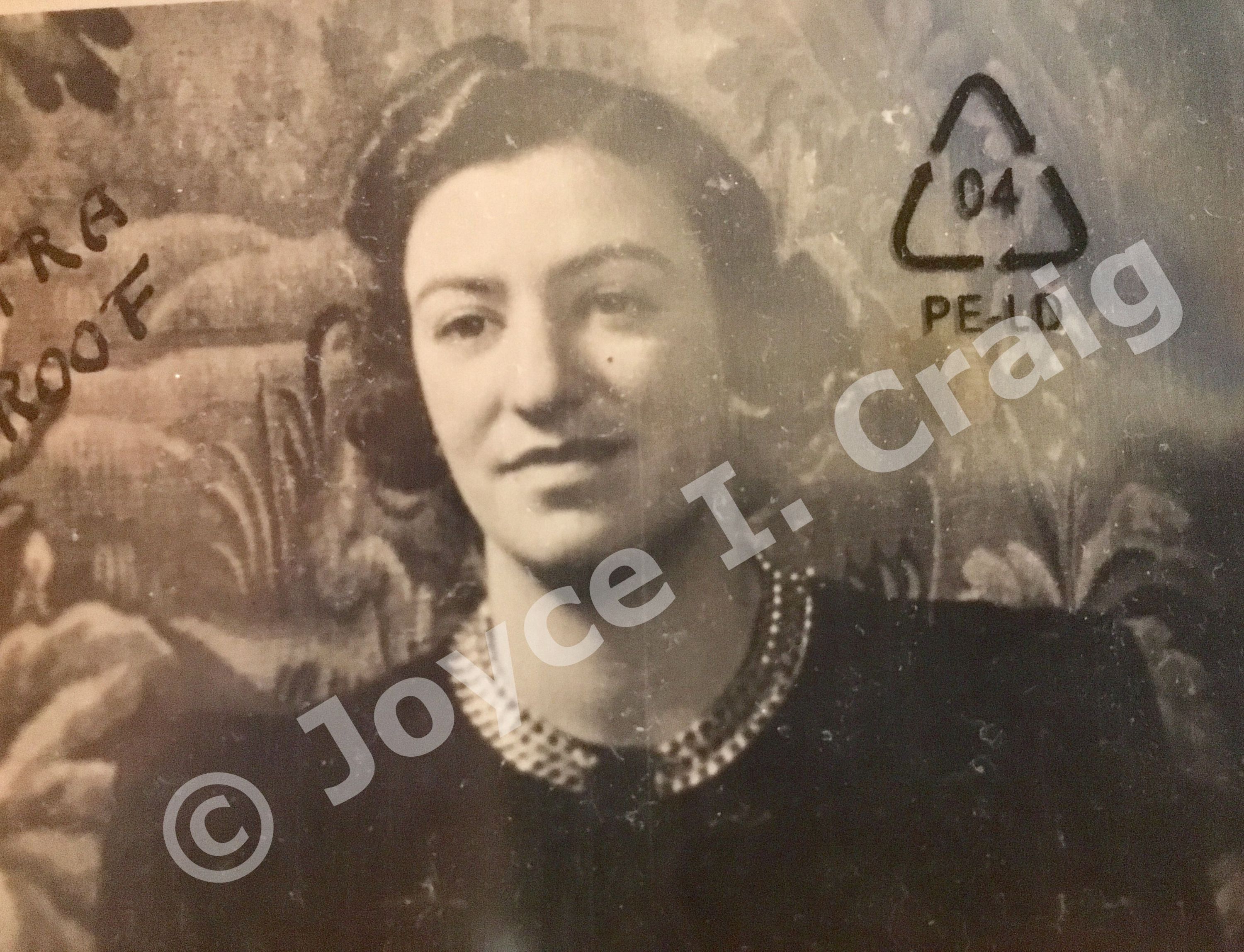
Rudolf Peter Kretsch, who had studied at the Technical University of Vienna between 1918 and 1925, went into exile on his own accord. After leaving his father's apartment at Kaiserstraße 79 (7th municipal district of Vienna), he made his way via France to the USA. Here, he married Margit Littmann on April 21, 1940, and they had four children: Ruth Regina (October 7, 1941 - January 1, 1946), Peter (born March 19, 1943, died October 24, 2017), Eleanor (Ellie, born December 3, 1946), and Joyce (born May 26, 1953). In 1943, the young family adopted the surname Craig; Rudolf also changed his first name: From then on, he called himself Ralph Peter Craig.
While World War II was still ongoing, the Craig family moved to Los Angeles. While Rudolf founded the Red Point Corporation, which served as a supplier for the aerospace industry, Margit enrolled in the early 1970s at the (Catholic) Immaculate Heart College (Los Angeles), where she earned a Bachelor of Arts degree - in a way, fulfilling what had been denied to her at the University for World Trade. Subsequently, she worked in public service in Los Angeles. Additionally, she volunteered in social work. She passed away on July 4, 1987, in Sherman Oaks. Her husband had died on May 8, 1983.
Margit's brother Herbert was enrolled at the Technical University of Vienna between the academic years of 1929/30 and 1934/35; here he took the second state exam in Technical Chemistry on June 27, 1935. Afterwards, he studied for a year at the University of Milan and apparently worked on his dissertation. He submitted this in the fall of 1937 to the Technical University of Vienna. However, the two evaluations contradicted each other on crucial points, so Herbert Littmann was not allowed to take the final examinations at that time. To what extent he complied with the request to revise his doctoral thesis in the following months cannot be verified. In June 1938, his university sent him back two copies of his dissertation and refunded the examination fees. In other words: The path to a doctorate was barred to Herbert after the 'Anschluss' of Austria. It cannot be excluded that he was informed that Jewish students were no longer welcome. With the introduction of a Numerus clausus of two percent in the summer semester of 1938 and its reduction to one percent in the following winter semester, a new review and the taking of the final examinations would have been nearly impossible; after the Reich Night of Broken Glass from November 9 to 10, 1938, graduation was completely excluded for Jewish women and men. Facing the increasingly menacing persecution of Jews, Herbert Littmann fled to Palestine via Yugoslavia. There he started a family and settled as an entrepreneur in the construction industry.
From Margit's father Oskar, it is known that he was accepted into the Jewish lodge B’nai B’rith on November 30, 1926, in Vienna under membership number 687 - one of the "meeting places of the liberal enlightened bourgeoisie" (Patka 2009, p. 129). Professionally, he was able to establish himself successfully in Austria as an entrepreneur after World War I: In Margit's birth year of 1919, he founded, together with the Viennese merchant Otto Neuhut, the timber trade Neuhut & Littmann; its business address was Nußdorfer Straße 26, not far from the apartment in Fuchsthallergasse. In Styria and Upper Austria (Gußwerk, Ebensee, Krieglach, and Rasing), the company operated sawmills and “forest manipulation,” which included “felling, uprooting, debarking the trunk, and stripping it up to a passable road” (Bronneck 1927, p. 18). Starting in 1927, they added the production of wood wool and the manufacture of railway sleepers and telegraph poles. Initially, the company employed 50 workers, later 60. Its “roundwood cut” was 20,000 m3 annually.
Following the 'Anschluss' of Austria in March 1938, his company was also 'Aryanized' and subsequently liquidated: Based on the aforementioned Law on the Appointment of Provisional Administrators and Provisional Supervisors, Hans Heß was appointed as a provisional administrator. In this role, Heß, who also participated in the expropriation of other Jewish businesses in Vienna, exercised "all legal acts" according to § 2 of the mentioned law. The powers of the two Jewish owners, however, had to “rest.” Thus, Oskar Littmann and Otto Neuhut were de facto excluded from their company, whose sawmills employed 23 workers at the time of 'Aryanization' (Melichar 2004, p. 625). At the end of September 1942, the company was then deleted from the commercial register.
In light of the aggressive antisemitic atmosphere and legislation, the life-threatening dimension of which intensified dramatically after the Reich Night of Broken Glass, Oskar Littmann and his wife left Austria. On December 30, 1938, they gave up their apartment in Fuchsthallergasse. Subsequently, the Littmann couple stayed for nearly a week in a guesthouse on Währinger Straße in the 9th municipal district of Vienna. From there, Margit Littmann's parents initially fled to Zurich. They then traveled via Paris and Marseille to Palestine, where they reunited with their previously emigrated son Herbert. In 1940, Oskar and Adele exiled to Los Angeles. Here, they survived World War II. Oskar Littmann, like his former business partner Otto Neuhut, spent years trying to regain the 'Aryanized' family business or obtain compensation from the USA. Precisely one month after the end of World War II in Europe, on June 8, 1945, he received American citizenship. On October 13 of the same year, Oskar Littmann died of natural causes in Los Angeles.
After her husband's death, Margit's mother, who had been granted American citizenship on September 14, 1945, moved to Tel Aviv (Israel) in 1960. She passed away there in October 1982.
Author: Johannes Koll
Support for research: Barbara Timmermann
Photos
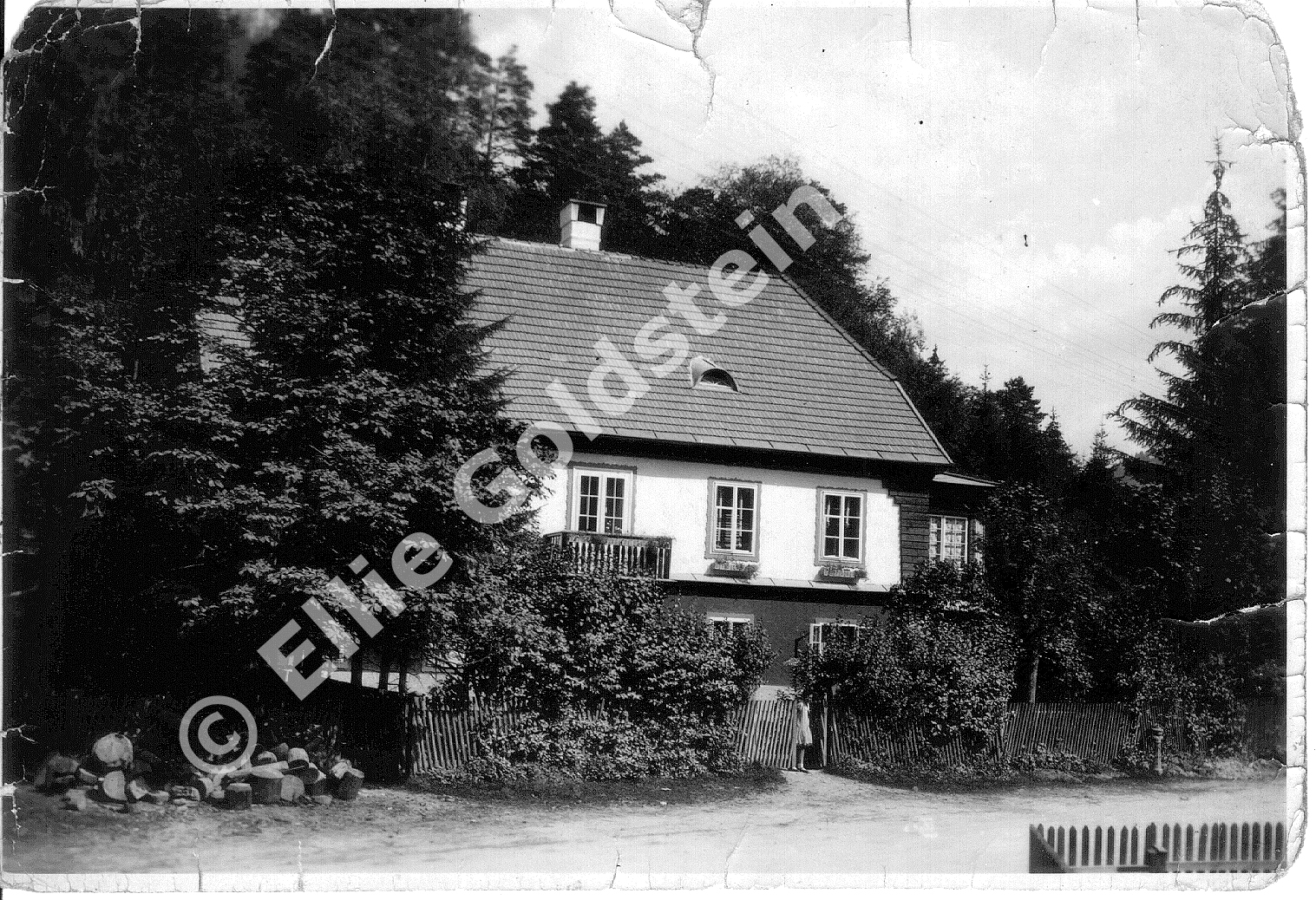

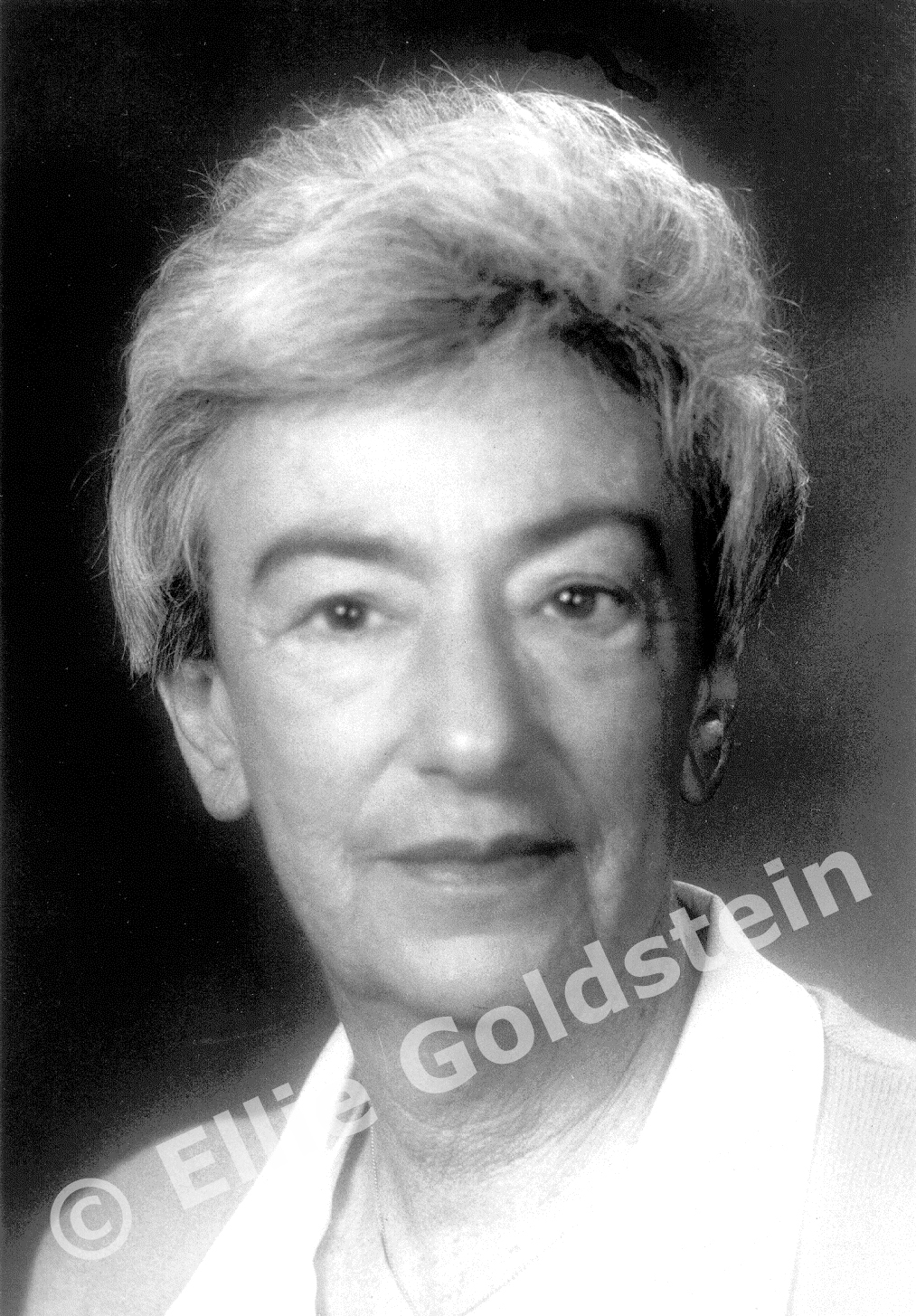

Source material
Wirtschaftsuniversität Wien, Universitätsarchiv, Studierendenkarteikarte.
E-Mail von Joyce I. Craig (Tochter von Margit Littmann, Los Angeles) an Barbara Timmermann vom 9. Februar 2017.
E-Mails von Ellie Goldstein (Tochter von Margit Littmann, Los Angeles) an PD Dr. Johannes Koll (WU Wien) vom 19. März, 10. September und 17. November 2017.
Meldeauskünfte des Wiener Stadt- und Landesarchivs, GZ MA 8 – B-MEW – 553791/2013 und B-MEW-804498/2014.
GenTeam. Die genealogische Datenbank, http://www.genteam.at [31. Mai 2014].
E-Mails von Dr. Paulus Ebner (Archiv der Technischen Universität Wien) vom 15. Februar 2017 und vom 22. März 2017 an PD Dr. Johannes Koll (WU Wien).
Marcus G. Patka: Die israelitischen Humanitätsvereine B'nai B'rith für Österreich in der Zwischenkriegszeit und ihr Verhältnis zur "jüdischen" Freimaurerei, in: Frank Stern/Barbara Eichinger (Hrsg.): Wien und die jüdische Erfahrung 1900-1938. Akkulturation – Antisemitismus – Zionismus, Wien/Köln/Weimar 2009, S. 115-129.
Hugo Bronneck: Die Preisermittlung der Zimmererarbeiten und ihre technisch-kaufmännischen Grundlagen, Berlin/Heidelberg 1927.
Österreichisches Staatsarchiv, Archiv der Republik, Finanzen, Hilfsfonds, Zl. 10241.
Zentralblatt für die Eintragungen in das Handelsregister in Deutschösterreich, 18. Jg., Nr. 36 vom 7. Mai 1919, S. 484, Nr. 5861.
Industrie-Compass. Deutschösterreich, Tschechoslowakei, Ungarn, Jugoslavien (S.H.S.-Staaten), Jg. 1920/21, Bd. 5, Wien/Prag/Leipzig 1921, S. 1771.
Industrie-Compass 1924, Bd. 4: Österreich, Wien 1924, S. 1263.
Compass. Industrielles Jahrbuch 1927: Österreich, 60. Jg., Wien 1927, S. 1075.
Compass. Industrielles Jahrbuch1930: Österreich, 63. Jg., Wien 1930, S. 1098.
Compass. Industrielles Jahrbuch 1935: Österreich, 68. Jg., Wien 1935, S. 1028.
Zentralblatt für die Eintragungen in das Handelsregister in der Ostmark, 37. Jg., Nr. 40 vom 5. Oktober 1938, S. 823, Nr. 12626.
Zentralblatt für die Eintragungen in das Handelsregister in der Ostmark, 37. Jg., Nr. 43 vom 26. Oktober 1938, S. 886, Nr. 13705.
Zentralblatt für die Eintragungen in das Handelsregister in der Ostmark, 38. Jg., Nr. 41 vom 11. Oktober 1939, S. 641, Nr. 12014.
Zentralblatt für die Eintragungen in das Handelsregister in der Ostmark, 41. Jg., Nr. 40 vom 7. Oktober 1942, S. 344, Nr. 6105.
Peter Melichar: Arisierungen und Liquidierungen im Papier- und Holzsektor, in: Ders. u.a.: Ökonomie der Arisierung, Teil 2: Wirtschaftssektoren, Branchen, Falldarstellungen (= Veröffentlichungen der Österreichischen Historikerkommission. Vermögensentzug während der NS-Zeit sowie Rückstellungen und Entschädigungen seit 1945 in Österreich, Bd. 10/2), Wien/München 2004.
Ancestry.com: U.S. Social Security Applications and Claims Index, 1936-2007, http://search.ancestry.de/search/db.aspx?dbid=60901 (zu Margit Littmann) [14. Februar 2017].
Ancestry.com: U.S. Naturalization Record Indexes, 1791-1992, Nr. 6183799 http://search.ancestry.com/search/db.aspx?dbid=1629 (zu Oskar Littmann) [14. Februar 2017].
Ancestry.com: U.S. Naturalization Record Indexes, 1791-1992, Nr. 6186018, http://search.ancestry.com/search/db.aspx?dbid=1629 (zu Adele Littmann) [14. Februar 2017].